
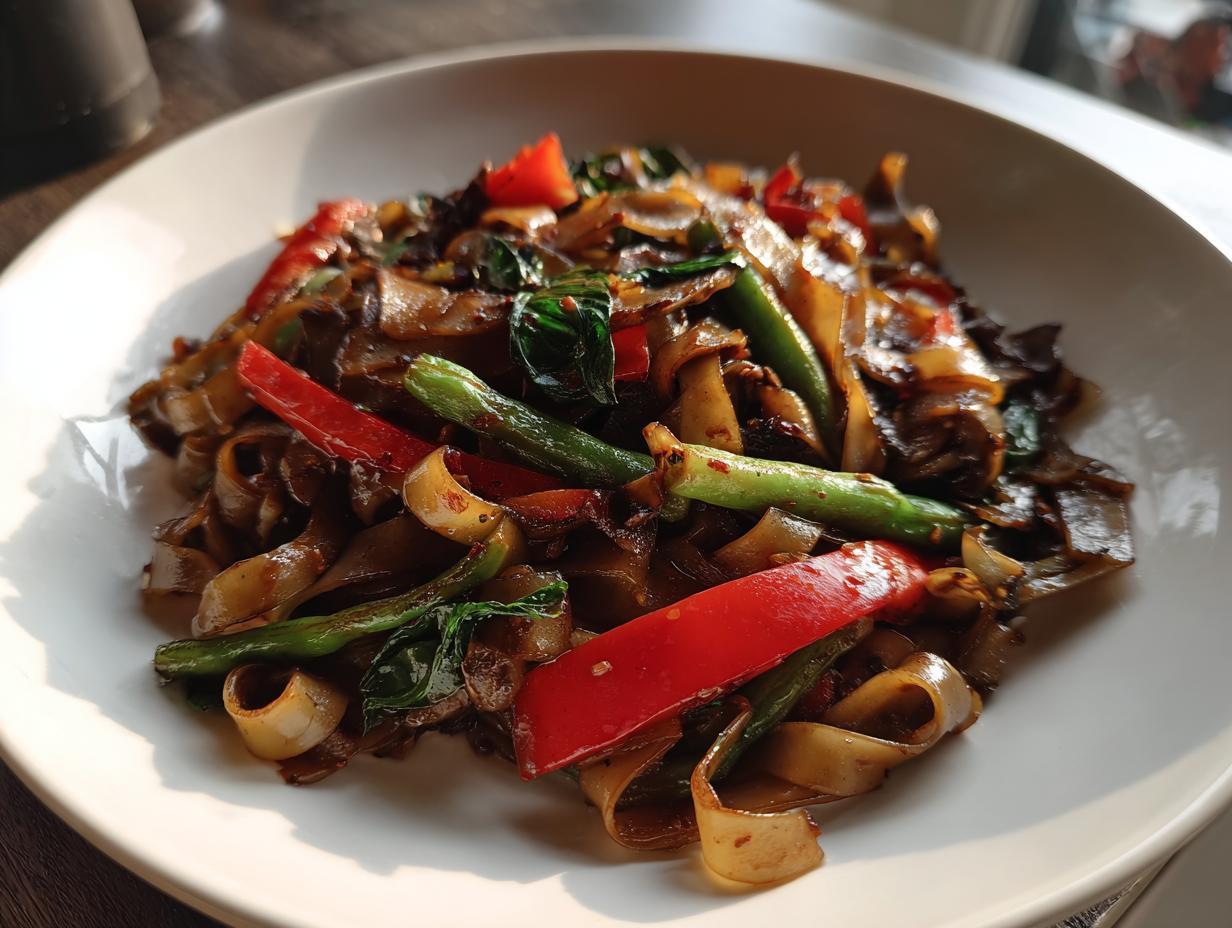
There are those nights, right? You get home, and all you can think about is that vibrant, crazy-spicy, totally addictive takeout flavor. If you’re like me, that craving often hits hard for authentic thai drunken noodles. When I was deep in my marketing burnout years, trying to juggle everything, I relied way too much on ordering in because cooking seemed impossible. I decided I needed to reclaim my kitchen, shifting back to simple, powerful flavors that didn’t demand hours of my time. This Pad Kee Mao recipe is the result of that mission—it brings the true, smoky street-style joy right to your counter in under 30 minutes. We’re making it happen tonight! If you’re looking for more fast, satisfying meals, you can always check out my guide over at quick and easy weeknight dinners.
- Why You Need This Street Style Thai Drunken Noodles Recipe
- Gathering Ingredients for Authentic Thai Drunken Noodles
- How to Make Thai Drunken Noodles: Step-by-Step
- Tips for Perfect Street Style Pad Kee Mao
- Customizing Your Thai Drunken Noodles Recipe
- Serving Suggestions for This Flavorful Thai Dinner Idea
- Storage and Reheating Instructions for Leftover Thai Drunken Noodles
- Frequently Asked Questions About Pad Kee Mao
- Nutritional Snapshot for Your Easy Weeknight Noodles
- Share Your Experience Making Authentic Thai Noodles
- Nutritional Snapshot for Your Easy Weeknight Noodles
- Share Your Experience Making Authentic Thai Noodles
Why You Need This Street Style Thai Drunken Noodles Recipe
I know that craving for truly great Asian food. You want that vibrant punch of spice and savory depth, but you absolutely do not have two hours to mess around after coming home from a long day. That’s why this specific Pad Kee Mao recipe changed my weeknight cooking game entirely. Trust me, this isn’t just another stir-fry; it’s the closest you’ll get to eating right off the street cart in Bangkok, only you’re whipping it up faster than delivery can get to your door.
Here’s exactly what makes this recipe the one you should pin right now:
- It nails that signature savory, spicy, and herbaceous balance that authentic Thai food is famous for. You get all the layers of flavor.
- We focus heavily on the high-heat technique, which means you aren’t just cooking dinner; you are developing that slightly charred, wonderful smoky taste.
- It’s customizable! Whether you have chicken breasts, shrimp, or just a block of tofu, this dish happily accepts whatever protein you have on hand.
- The use of fresh Thai basil completely transforms the dish, bringing in that essential, slightly anise-like aroma that canned or dried herbs just can’t touch.
- The whole affair—from chopping to eating—takes under 30 minutes. We keep things super efficient, just the way I believe home cooking should be!
Achieving Authentic Flavor Profile
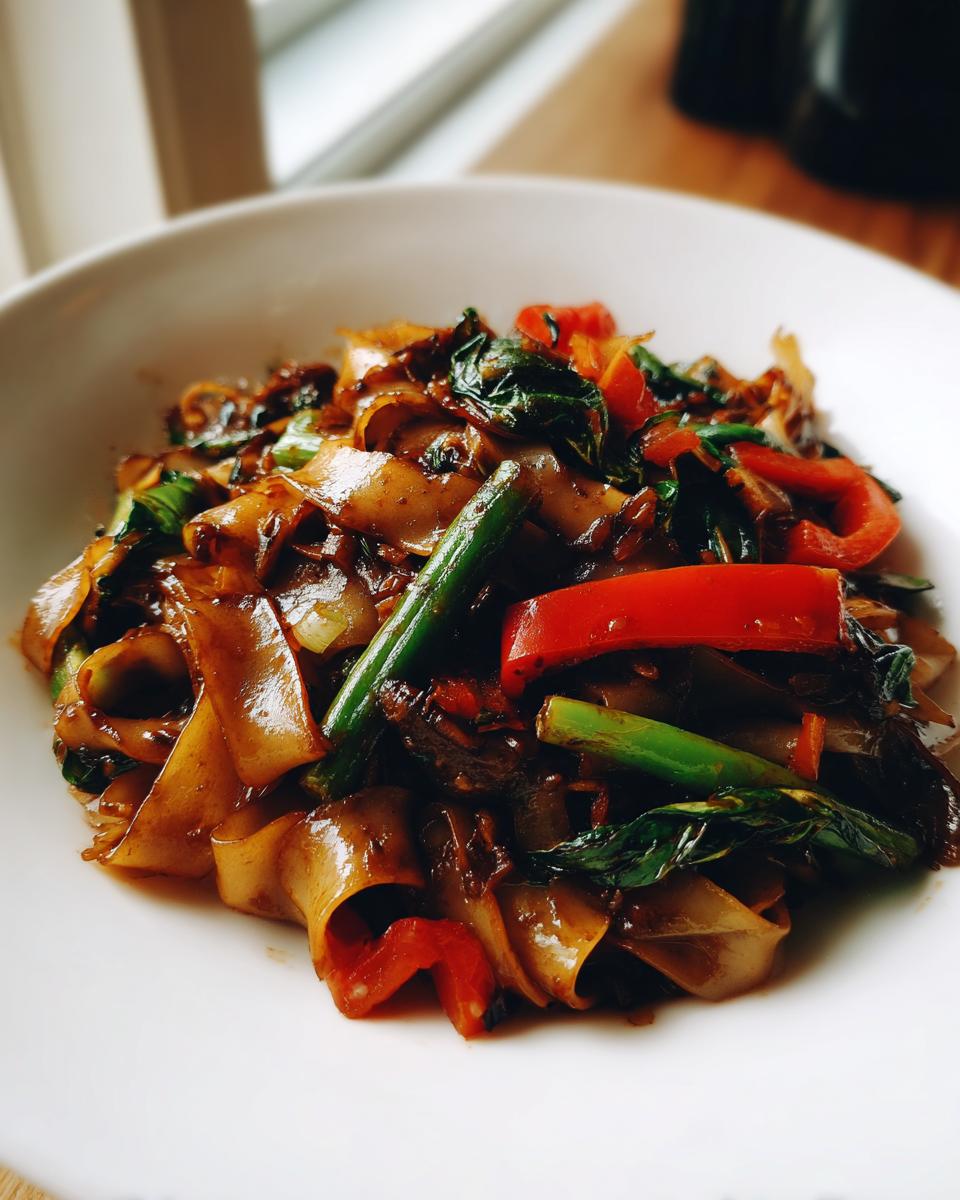
So, what’s the dirty little secret to the real deal flavor in these thai drunken noodles? It’s twofold, really: high heat and the right dark sauce. You absolutely must use the dark sweet soy sauce. It doesn’t add much sweetness, but it gives the wide rice noodles that beautiful, deep mahogany color and a slight molasses richness that you see in restaurant versions. Without it, your noodles look pale and sad! We build that smoky component, often called ‘wok hei,’ by making sure our wok is screaming hot before anything goes in. This intense heat sears the ingredients, creating that faint char that screams authentic street food.
Quick Asian Dinner Ready in Minutes
My whole philosophy at Pure Plate Path is that nourishment shouldn’t stress you out! This is one of those recipes where the prep is fast—maybe ten minutes to chop veggies and whisk the sauce—but the cooking is lightning speed. The actual transformation from raw ingredients to finished plating is about fifteen minutes. That makes this a genuine quick Asian dinner solution. You get restaurant quality food served up while most takeout drivers are still finishing up their orders!
Gathering Ingredients for Authentic Thai Drunken Noodles
Prepping is everything when you’re cooking this fast. If you’re standing at the stovetop doing five things at once—which you will be!—you need everything clean, measured, and ready to go. This ensures you can focus 100% on getting those noodles sizzling at high heat instead of frantically looking for the fish sauce. Getting your ingredients together, focusing on quality, is how we make sure this homemade meal beats any takeout experience. It truly sets the stage for success in this kind of quick stir-fry!
I always try to have my meal prep ready right beside the stovetop before I even turn that burner on.
For the Savory Spicy Noodle Sauce
Don’t skimp on these sauce components; they build the deep flavor base we are looking for in this dish. Pay special attention to the dark sweet soy sauce. I’m serious about this one; if you skip it just to save a trip to the Asian market, your noodles will look pale, and you miss some of that beautiful caramelized depth. It’s non-negotiable for that signature rich brown color!
- 3 tablespoons oyster sauce
- 2 tablespoons soy sauce (or tamari if you need gluten-free)
- 1 tablespoon dark sweet soy sauce (Trust me, grab this one!)
- 1 teaspoon fish sauce (for that salty umami hit)
- 1 teaspoon sugar (just a touch to balance the salt)
- 1/2 teaspoon ground white pepper
Protein and Vegetable Choices for Pad Kee Mao
For the noodles themselves, fresh wide rice noodles are absolutely the winner here. They have the best chew, but if you can only find dried, just make sure you cook them until they are pliable but still a little firm—we call that al dente—because they are going to cook a little more in the wok. For your protein, slice everything thinly so it cooks quickly and evenly alongside the vegetables.
- 1 pound fresh wide rice noodles (or dried, prepared perfectly al dente)
- 1 pound protein—I love using thinly sliced chicken breast, but beef sirloin, shrimp, or firm tofu all work wonderfully here.
- 2 tablespoons neutral cooking oil (you need high smoke point oil)
- 4 cloves garlic, minced super fine
- 2-4 Thai bird’s eye chilies, thinly sliced (Be careful when slicing these little heat bombs!)
- 1/2 cup sliced onion
- 1 red bell pepper, sliced into strips
- 1 cup baby corn, halved
- 1 cup green beans, trimmed and cut into 1-inch pieces
- 1 cup fresh Thai holy basil leaves (The true star—use sweet basil if you absolutely cannot find holy!)
How to Make Thai Drunken Noodles: Step-by-Step
Okay, listen up! This is where the magic really happens, and speed is your best friend. When you’re making a proper Pad Kee Mao recipe, you can’t stop to chop, measure, or think. Everything has to be ready before you even turn the flame on. We’re going for that high-intensity, quick-cook restaurant vibe. Keep a good spatula or tongs nearby because you’ll be moving fast! If you’re looking for other quick, flavorful meals, I always reference my tips on stovetop beef noodle soup when I need something comforting fast.
Sauce Preparation and Noodle Readiness
First things first: get that sauce mixed. In a small bowl, whisk together all your sauce components—the oyster sauce, the two types of soy sauce, fish sauce, sugar, and white pepper. Whisk it until it looks uniform and set it aside where your hand can grab it instantly. Next, deal with those noodles. If they are fresh, just gently pull them apart so they don’t stick in a giant clump later. If you used dried ones, make sure they are drained SUPER well. Seriously, we don’t want any excess water in the wok or it will just steam everything instead of searing it.
Building the Smoky Flavor in Your Thai Drunken Noodles
Now, crank your heat setting to the absolute highest you can manage safely. You want that wok or giant skillet ripping hot. Add your cooking oil—use something neutral—and let it shimmer. Toss in your minced garlic and those scary-looking sliced chilies immediately. You only have about 15 seconds here before the garlic burns, so keep them moving constantly! Once it smells amazing and fragrant, throw in your sliced protein. Cook that until it’s about 90% done, then toss in all your vegetables—the onions, peppers, corn, and green beans. Stir-fry for about a minute. They should still have a snappy crunch when done. If you’re trying to get fancy with quick cooking methods, looking at my air fryer guides helps, but for this, the wok is the only way to get that authentic sear!
Final Toss and Basil Incorporation
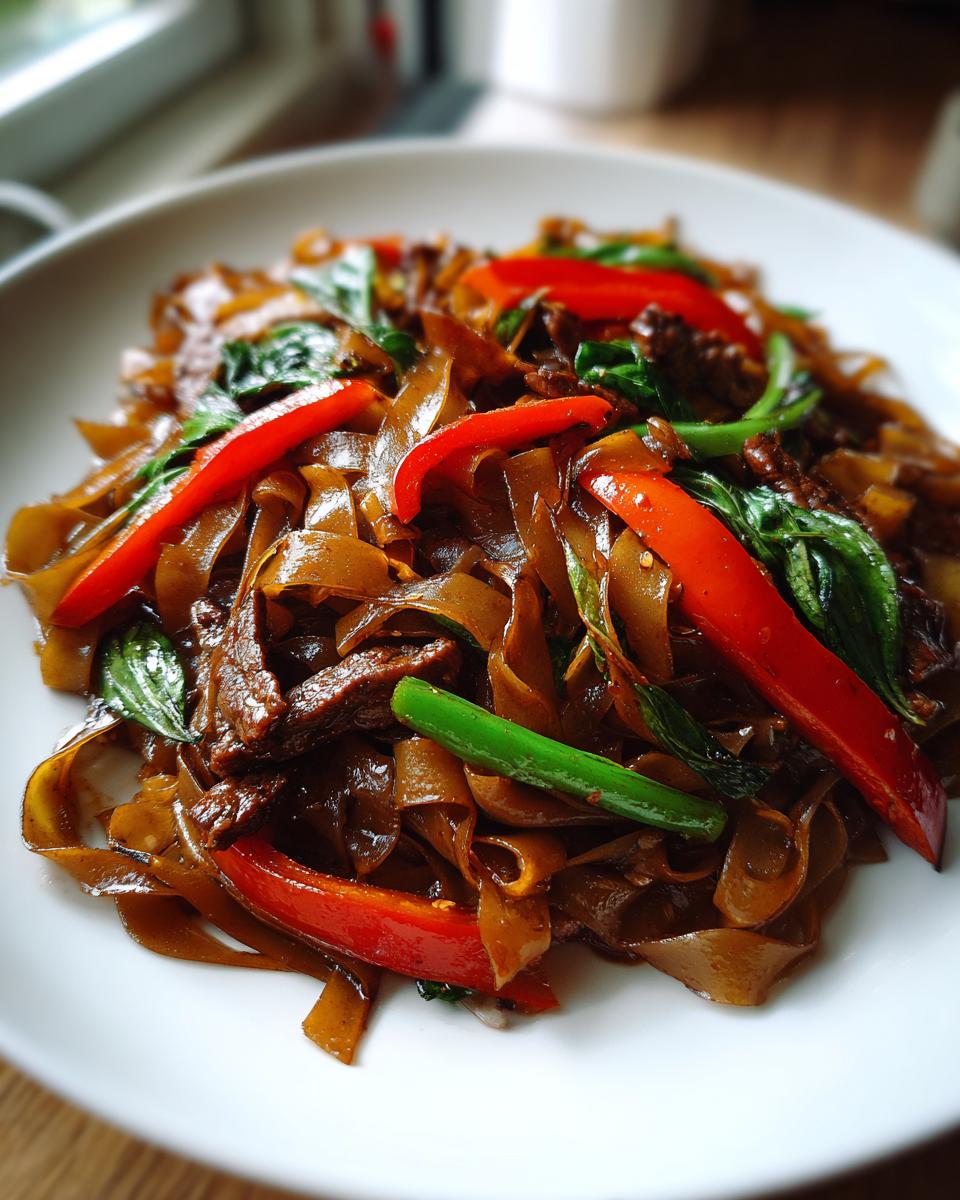
This is the moment of truth for developing that signature char, that smoky essence for your thai drunken noodles. Push all those ingredients to one side of the hot pan if you can. Dump the prepared noodles into the empty space. Pour that prepared sauce right over the noodles! Grab your tongs and start tossing everything together rapidly. You need to mix it hard and fast for a minute or two. You should see the noodles starting to darken and stick just a tiny bit to the pan—that’s good char developing! Once you feel like everything is beautifully coated and heated through, immediately pull the wok off the heat. Now, toss in all those beautiful Thai basil leaves and mix just until they wilt slightly. That’s it! Serve this right away while it’s piping hot.
Tips for Perfect Street Style Pad Kee Mao
We’ve covered the steps, but getting that restaurant-quality texture and amazing depth of flavor in your best Thai noodle stir fry requires a little insider know-how. My goal here at Pure Plate Path is to make sure you feel completely confident making this spicy stir fry at home, especially when it comes to managing that high-heat cooking process. Getting the technique right for these thai drunken noodles is what separates a good attempt from something truly incredible.
If you’ve ever wondered how to level up your stir-frying game, check out my thoughts on roasting, which often uses similar high-heat principles, over at my guide to perfect roasted vegetables.
Technique for Achieving Wok Hei in Your Thai Drunken Noodles
This is the difference between soggy noodles and noodles kissed by fire—the elusive ‘wok hei,’ or smoky breath of the wok. It’s crucial, and you can absolutely fake it at home! The biggest mistake people make is tossing everything in at once. When you crowd your pan, the temperature drops instantly, and your ingredients start to steam in their own juices instead of searing. That’s not flavor development; that’s just making wet food!
My recommendation? Cook in smaller batches if your pan isn’t huge. Cook your protein and veggies first, remove them, and then cook your noodles and sauce. You need maximum, unwavering heat when you toss the noodles with the liquids. This intense blast allows the sugars in the sauce to caramelize quickly on the hot metal, creating those beautiful charred edges that give your smoky drunken noodles that fantastic, complex flavor. Don’t be afraid of high heat!
Ingredient Substitutions for Thai Basil Noodles
Sometimes getting specific ingredients is hard, depending on where you live, but don’t let that stop you from getting this savory spicy noodle dish on the table. The most discussed ingredient is usually the basil. If you absolutely cannot find authentic Thai holy basil, please use sweet basil. It smells wonderful and will still give you a great aroma, though it will be milder and lack that specific peppery, slightly anise edge that holy basil provides. It’s worth seeking out the real stuff if you can, but sweet basil is perfectly acceptable for a regular weeknight version.
Also, if you are vegetarian—and I love making a full veggie version of this—you can easily swap the oyster sauce for a vegetarian mushroom sauce. This sauce provides that essential salty, deep umami note that we need to balance the spice, so make sure whatever sub you pick still hits that savory note. For more inspiration on building deep flavor, I sometimes reference great techniques I learned from other cooks, like the tips found over at Smart Kitchen Symphony when I’m aiming for that authentic touch.
Customizing Your Thai Drunken Noodles Recipe
One of the reasons I love keeping this Pad Kee Mao recipe in my back pocket for busy nights is just how versatile it is. Seriously, whatever protein you have thawed or whatever craving is hitting you hardest, this sauce works! It’s an incredibly forgiving recipe, which is perfect when you’re trying to pull together an easy weeknight noodles meal and time is tight.
When I want a slightly richer flavor, I’ll reach for flank steak because it sears beautifully against the high heat. If I’m going meatless, I press extra-firm tofu really well, cube it, and give it a little toss in cornstarch before adding it to the wok. It gets wonderfully crisp!
Protein Swapping: Chicken, Beef, Shrimp, or Tofu
If you’re planning on making Pad Kee Mao with chicken, slice your breast or thigh meat thin and against the grain. This keeps it tender throughout the intense stir-frying process. If shrimp is your choice—the Pad Kee Mao with shrimp version is fantastic for speed—add it later than the meat, usually just after the vegetables, because shrimp cooks in literally 60 to 90 seconds! You do not want rubbery shrimp, so keep an eye on those pink beauties.
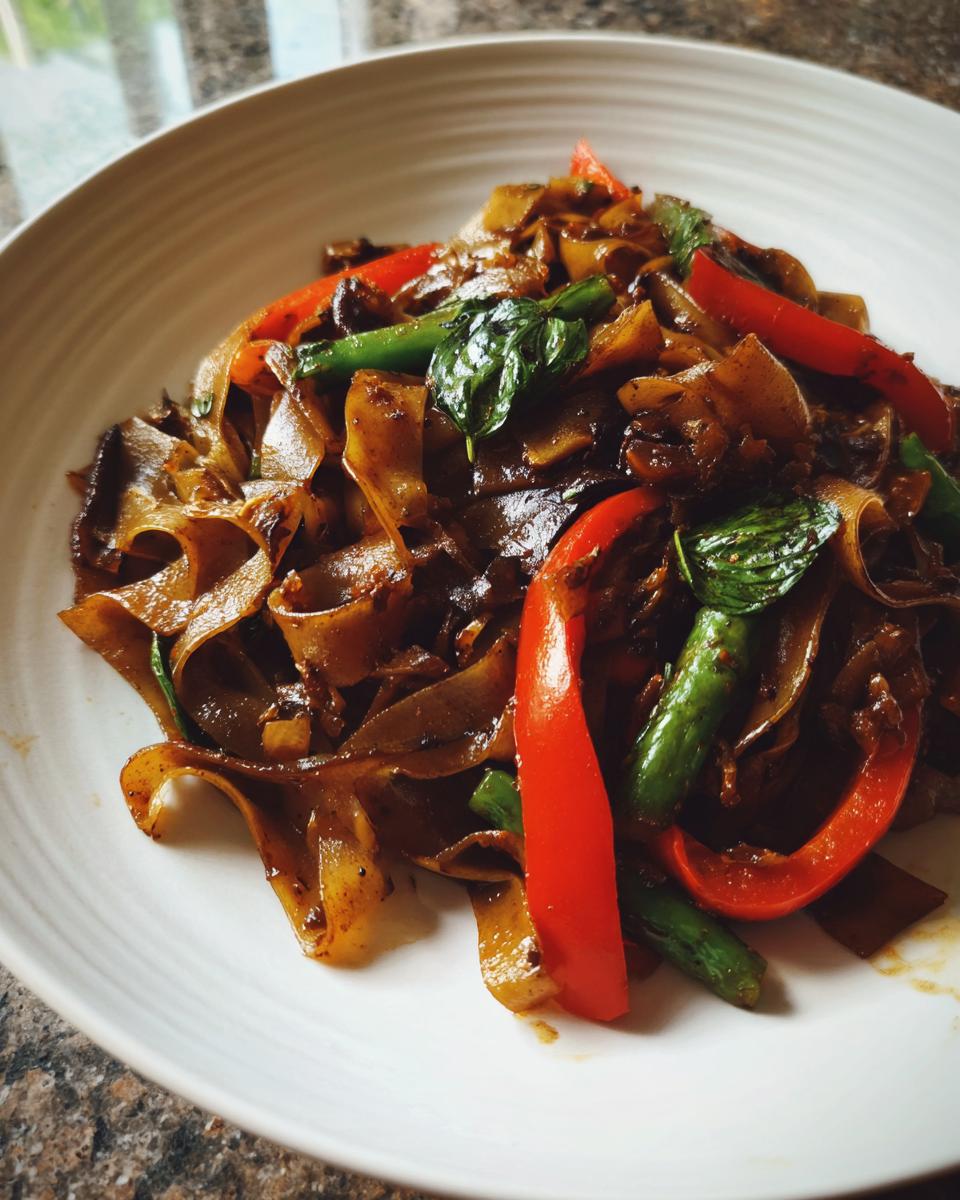
Before you sauté any protein, slice it super thin. This is crucial for speed. If you slice your beef thick, it will be tough by the time the noodles are cooked. Think thin strips, almost bite-sized for everything. This allows everything to cook evenly in those few minutes we dedicate to the main stir-fry phase.
Adjusting the Heat Level for Your Spicy Thai Stir Fry
The heat in Thai food is legendary, and that’s certainly true for these thai drunken noodles. I mentioned using 2 to 4 Thai bird’s eye chilies, but honestly, that’s a sliding scale based on how much fire you like in your dinner! If you’re nervous about the heat, start with just one chili, or maybe skip the seeds and membranes entirely. Remember, we built a lot of deep flavor into the sauce already with the fish sauce and robust soy, so you’ll still get amazing flavor even if you dial back the chili count.
If you’re making this for someone who likes zero heat, you can skip the fresh Chilies in the stir-fry step entirely and then just garnish individual plates with a few slices of mild jalapeño or a tiny dash of sriracha at the end. I personally can’t resist the heat, but I always keep a side of fresh lime wedges for anyone who wants to balance their spice! For more inspiration on vibrant proteins, take a peek at my recipe for juicy grilled chicken satay skewers—it’s all about big flavor!
Serving Suggestions for This Flavorful Thai Dinner Idea
Once you’ve nailed that spicy, savory punch of your homemade thai drunken noodles, you might wonder what to serve alongside them! Since this is such a dynamic, richly flavored dish—packed with spice, basil aromatics, and that deep umami sauce—you really don’t need much else, but sometimes a simple side can harmonize the meal perfectly.
I usually approach serving this dish by offering something that cools the palate slightly or something truly neutral to absorb those intense flavors. It’s all about balance, right? I want the noodles to shine, but they go even better with a simple, beautiful helper dish alongside them.
Simple Rice Sides to Complement the Spice
While these noodles stand alone beautifully, sometimes you just want a comforting bed of rice underneath, especially if you went heavy on the chilies! If you’re aiming for something more exciting than plain jasmine, I highly recommend whipping up a batch of turmeric rice. It’s bright yellow, incredibly fluffy, and has a delicate earthiness that contrasts wonderfully with the heat of the spicy Thai stir fry. You can find my simple guide for easy turmeric rice right here on the blog.
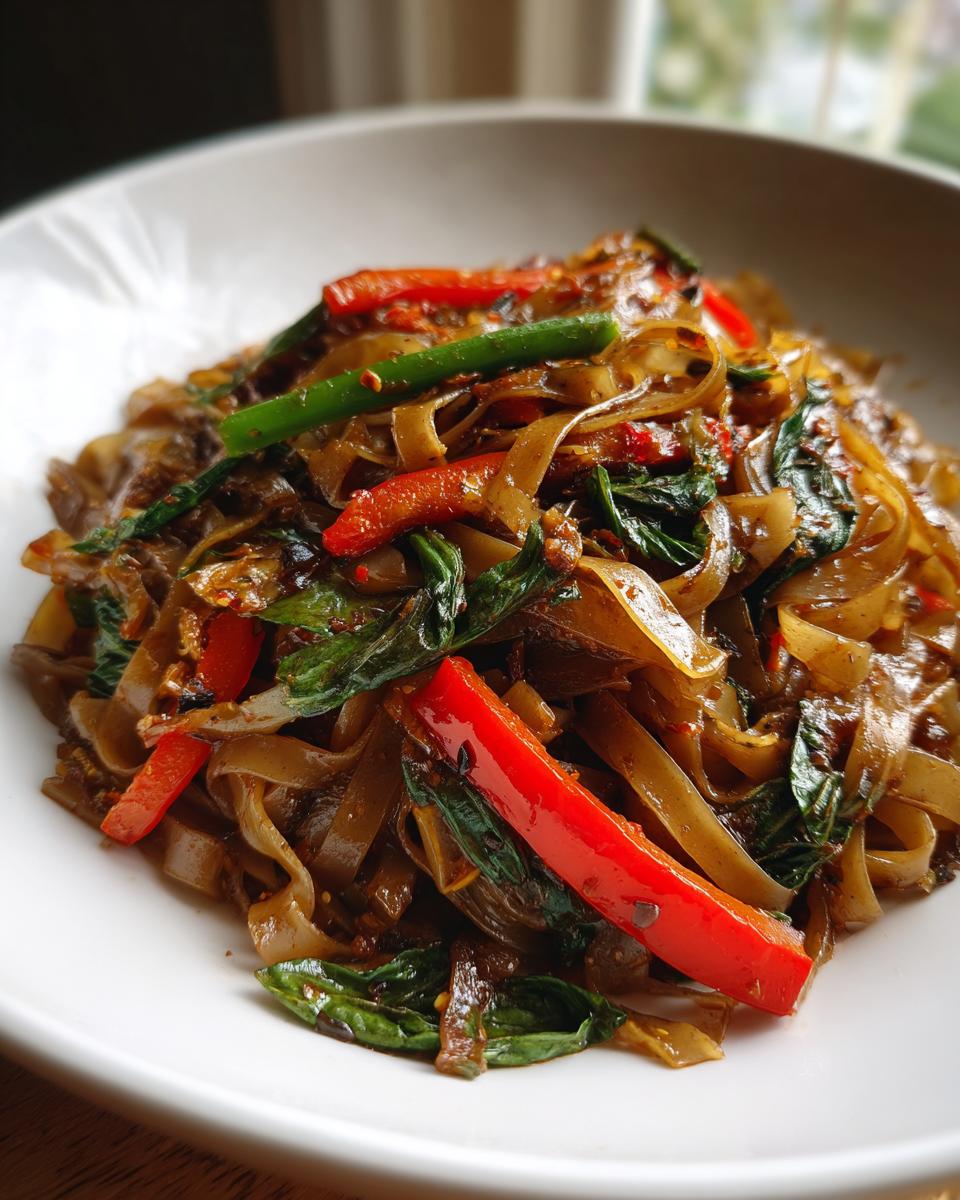
Alternatively, if you made a very vegetable-heavy batch, you might skip the rice and just serve it as is. But if you have some leftover lime, a quick squeeze over the top right before serving adds a necessary hit of acid that brightens up the whole plate. It’s amazing how one small fruit can make a massive difference in balancing a heavy savory dish like this Pad Kee Mao recipe.
Counteracting the Heat with Cool Garnishes
If you’re serving this to a crowd with varying heat tolerances, keep the heat level moderate in the stir-fry and let people doctor their own plates. This is where garnishes become your best friends. We are aiming for contrast!
- Fresh cilantro sprigs: The coolness and herbaceousness are a welcome break from the spice.
- Lime wedges: Non-negotiable! The fresh acidity cuts through the rich sauce perfectly.
- Extra fresh Thai basil leaves: Just offer a small bowl on the side so people can tear and add more as they wish.
- Finely sliced cucumber: A tiny bowl of sliced cucumber on the side is just cooling, crisp refreshment between bites of that intense spice.
These little additions ensure everyone enjoys their Flavorful Thai dinner idea without feeling overwhelmed by the heat. It’s all about making sure the eating experience remains joyful and nourishing, which is what Pure Plate Path is all about!
Storage and Reheating Instructions for Leftover Thai Drunken Noodles
Now, I have to be honest with you: these thai drunken noodles are truly at their absolute peak flavor and texture the moment they come sizzling out of the wok. They are meant to be eaten right then and there! The fresh, wide rice noodles absorb liquid incredibly fast, so leftovers are always a bit of a race against time.
That said, if you’re smart about leftovers, you can definitely enjoy a second serving later as an easy weeknight noodles lunch. Just remember, they won’t have that fantastic, slightly charred texture from the night before, but we can fix that with a little know-how.
Best Way to Store Your Pad Kee Mao
The key here is to limit how much moisture the noodles absorb while they sit in the fridge. Get an airtight container—using glass is always my preference—and transfer the leftovers quickly. Try not to pack them down too tightly. They should last happily in the refrigerator for up to two days, but after that, the noodles tend to get a bit too soft for my liking. Keep them chilled and covered tightly.
If you happen to have a ton left, this really is much better enjoyed fresh. But if you need to save some, just make sure they go into the cold fast! This helps lock in the remaining freshness of that Thai basil.
Reheating Without Making Mushy Noodles
This is the most important part if you want to salvage your street style Pad Kee Mao leftovers! Do not, under any circumstance, treat this like plain pasta and microwave it dry. It will seize up, get tough in spots, and generally look sad. We need to reintroduce a little controlled moisture and steam.
Here’s my trick: Place the portion of noodles you want to eat into a non-stick skillet or small wok. Add just a tiny splash of water—think a teaspoon or two! Seriously, less is more here. You can also add an extra half teaspoon of soy sauce or fish sauce if you feel the flavor has dulled overnight. Heat this over medium to medium-high heat, stirring constantly. This steam helps loosen the noodles up and warms them through evenly without them becoming that mushy texture we want to avoid. It takes maybe three minutes tops. You want them hot, slightly pliable, but not swimming in liquid when you’re done!
Frequently Asked Questions About Pad Kee Mao
It’s so common to have questions when you’re diving into a new cuisine, especially one that’s as intensely flavored as Thai food! I totally get it—you want that authentic Thai noodles experience, and sometimes the terminology or ingredient requirements can feel a little mysterious. I’ve pulled together some of the most common things people ask me about this amazing, savory spicy noodle dish so you feel totally confident the next time you fire up that wok.
Does this Thai Drunken Noodles recipe actually contain alcohol?
Oh, this is the number one question I always get about thai drunken noodles! The answer is a resounding no for this recipe. Pad Kee Mao literally translates to “Drunken Noodles.” The story goes—and it might be true, who knows?—that the dish was invented as a fiery cure for a hangover, or perhaps the heat level itself makes you feel delightfully tipsy! Either way, we are only using savory, delicious, non-alcoholic ingredients here. You get 100% of the flavor payoff without any of the actual alcohol!
What is the best type of noodle for this spicy Thai stir fry?
If you can find them fresh, those wide, flat rice noodles, known as Sen Yai, are the absolute best choice for this spicy Thai stir fry. They have the perfect surface area to catch all that sauce, and they have this wonderful, slightly soft, chewy texture once cooked. When buying fresh, they usually come pre-separated in pouches. If you only have access to dried noodles, don’t sweat it! Just make sure you boil them just until they are pliable but still holding their shape—you want them slightly undercooked, or ‘al dente’. Remember, they’ll continue softening up when you toss them in that super-hot wok with the sauce.
How can I make this recipe vegetarian or vegan?
This is such an easy switch to make, and it comes out just as delicious! For the protein, simply use the firm tofu, making sure you press out as much water as possible first. Then, for the sauce, you have to replace the oyster sauce. You can find fantastic vegetarian mushroom sauce substitutes in most larger grocery stores now, and that works perfectly to deliver that deep, rich umami base needed for a great umami noodle recipe. Some people also use extra soy sauce, but the mushroom version really mimics that depth better. Skip the fish sauce, and you’ve got a fantastic vegan noodle dinner!
If you are looking for some healthy sides to pair with this amazing meal, I always keep my guide on making perfect fluffy cauliflower rice handy for nights when I want something light!
Nutritional Snapshot for Your Easy Weeknight Noodles
I always want to give you a clear picture of what you’re putting on your plate when you’re cooking at home—that’s part of the self-care process! Keep in mind that the final values will shift quite a bit depending on the exact protein you choose (shrimp versus beef always changes things) and how much sauce you decide your noodles really need. These numbers are an upfront estimate based on using standard chicken breast and moderate amounts of oil, designed to give you a good baseline idea for your easy weeknight noodles.
On average, one serving of these thai drunken noodles contains roughly 550 calories. You’ll find about 30 grams of protein to keep you satisfied, 85 grams of carbohydrates from those wonderful rice noodles, and about 12 grams of fat in total. We keep the sugar fairly low, around 10 grams, which is fantastic because most takeout versions load up on the sweet stuff!
Share Your Experience Making Authentic Thai Noodles
That’s it! You’ve got all the secrets now to making truly exceptional, smoky, spicy authentic Thai noodles that taste exactly like they came straight from a street cart. I pour my heart into making sure these techniques work for busy people just like you, so I would absolutely love to hear about your experience!
Did you manage to find the holy basil? How many chilies did you dare to use? Did you nail that smoky char on the noodles? Please take a moment to rate this Pad Kee Mao recipe below and leave me a comment. Seriously, your feedback helps the community, and I read every single one!
If you have any cooking questions that didn’t get answered here, don’t hesitate to reach out to me directly over on my contact page. Happy cooking, and enjoy that incredible, flavorful Thai dinner!
Nutritional Snapshot for Your Easy Weeknight Noodles
I always want to give you a clear picture of what you’re putting on your plate when you’re cooking at home—that’s part of the self-care process! Keep in mind that the final values will shift quite a bit depending on the exact protein you choose (shrimp versus beef always changes things from my air fryer meals to a stir-fry) and how much sauce you decide your noodles really need. These numbers are an upfront estimate based on using standard chicken breast and moderate amounts of oil, designed to give you a good baseline idea for your easy weeknight noodles.
On average, one serving of these thai drunken noodles contains roughly 550 calories. You’ll find about 30 grams of protein to keep you satisfied, 85 grams of carbohydrates from those wonderful rice noodles, and about 12 grams of fat in total. We keep the sugar fairly low, around 10 grams, which is fantastic because most takeout versions load up on the sweet stuff! We see about 2 grams of saturated fat and 4 grams of fiber contributing to this nourishing profile.
Share Your Experience Making Authentic Thai Noodles
That’s it! You’ve got all the secrets now to making truly exceptional, smoky, spicy authentic Thai noodles that taste exactly like they came straight from a street cart. I pour my heart into making sure these techniques work for busy people just like you, so I would absolutely love to hear about your experience!
Did you manage to find the holy basil? How many chilies did you dare to use? Did you nail that smoky char on the noodles when you made this Pad Kee Mao recipe? I really want to know!
Please take a moment to rate this recipe below using the stars provided; your feedback is genuinely helpful for other home cooks looking for the best way to make this quick Asian dinner. And if you snapped a photo of your gorgeous wok-charred creations, please tag me on social media! Seeing your success is the best part of running Pure Plate Path.
If you have any cooking questions that didn’t get answered here, don’t hesitate to reach out to me directly over on my contact page. Happy cooking, and enjoy that incredible, flavorful Thai dinner!
PrintStreet Style Thai Drunken Noodles (Pad Kee Mao) – Quick Weeknight Version
Make authentic, spicy Thai Drunken Noodles (Pad Kee Mao) at home in under 30 minutes. This recipe delivers the bold, savory, and slightly smoky flavor of street food using wide rice noodles and fresh Thai basil.
- Prep Time: 10 min
- Cook Time: 15 min
- Total Time: 25 min
- Yield: 4 servings 1x
- Category: Dinner
- Method: Stir-Frying
- Cuisine: Thai
- Diet: Vegetarian
Ingredients
- 1 pound fresh wide rice noodles (or dried, prepared per package)
- 1 pound protein (chicken breast, beef sirloin, shrimp, or firm tofu), sliced thinly
- 2 tablespoons neutral cooking oil (like canola or vegetable)
- 4 cloves garlic, minced
- 2–4 Thai bird’s eye chilies, thinly sliced (adjust for heat preference)
- 1/2 cup sliced onion
- 1 red bell pepper, sliced
- 1 cup baby corn, halved
- 1 cup green beans, trimmed and cut into 1-inch pieces
- 1 cup fresh Thai holy basil leaves (or sweet basil if holy basil is unavailable)
- For the Sauce:
- 3 tablespoons oyster sauce
- 2 tablespoons soy sauce (or tamari for gluten-free)
- 1 tablespoon dark sweet soy sauce (essential for color and richness)
- 1 teaspoon fish sauce
- 1 teaspoon sugar (palm or granulated)
- 1/2 teaspoon ground white pepper
Instructions
- Prepare the sauce: In a small bowl, whisk together the oyster sauce, soy sauce, dark sweet soy sauce, fish sauce, sugar, and white pepper. Set aside.
- Prepare noodles: If using fresh noodles, separate them gently. If using dried, soak or boil them according to package directions until pliable but still slightly firm (al dente). Drain well.
- Heat your wok or large skillet over high heat until it is very hot. Add the cooking oil. You want the pan hot to achieve a slight char.
- Add the minced garlic and sliced chilies to the hot oil. Stir-fry quickly for about 15 seconds until fragrant. Do not burn the garlic.
- Add your chosen protein (chicken, beef, tofu, or shrimp). Stir-fry until the protein is nearly cooked through, about 2-3 minutes.
- Add the onions, bell pepper, baby corn, and green beans. Stir-fry for 1-2 minutes until the vegetables begin to soften but retain some crunch.
- Push the ingredients to one side of the wok. Add the prepared noodles to the empty space. Pour the prepared sauce evenly over the noodles and protein mixture.
- Toss everything together rapidly using tongs or two spatulas, ensuring the sauce coats the noodles evenly. Continue stir-frying for 1-2 minutes, allowing the noodles to absorb the flavor and develop a slight char (wok hei).
- Remove the wok from the heat. Immediately stir in the fresh Thai basil leaves. Toss just until the basil wilts slightly.
- Serve your savory spicy noodle dish immediately. This quick Asian dinner is best eaten right away.
Notes
- For smoky flavor (wok hei), cook in small batches over the highest heat possible. Do not overcrowd the wok, as this steams the ingredients instead of searing them.
- If you cannot find Thai holy basil, use sweet basil, but know the flavor profile will be slightly milder.
- This recipe is naturally vegetarian if you use tofu and substitute the oyster sauce with vegetarian mushroom sauce.
- If you prefer a less spicy noodle dish, reduce the number of chilies or remove the seeds before slicing.
Nutrition
- Serving Size: 1 serving
- Calories: 550
- Sugar: 10
- Sodium: 1200
- Fat: 12
- Saturated Fat: 2
- Unsaturated Fat: 10
- Trans Fat: 0
- Carbohydrates: 85
- Fiber: 4
- Protein: 30
- Cholesterol: 50