

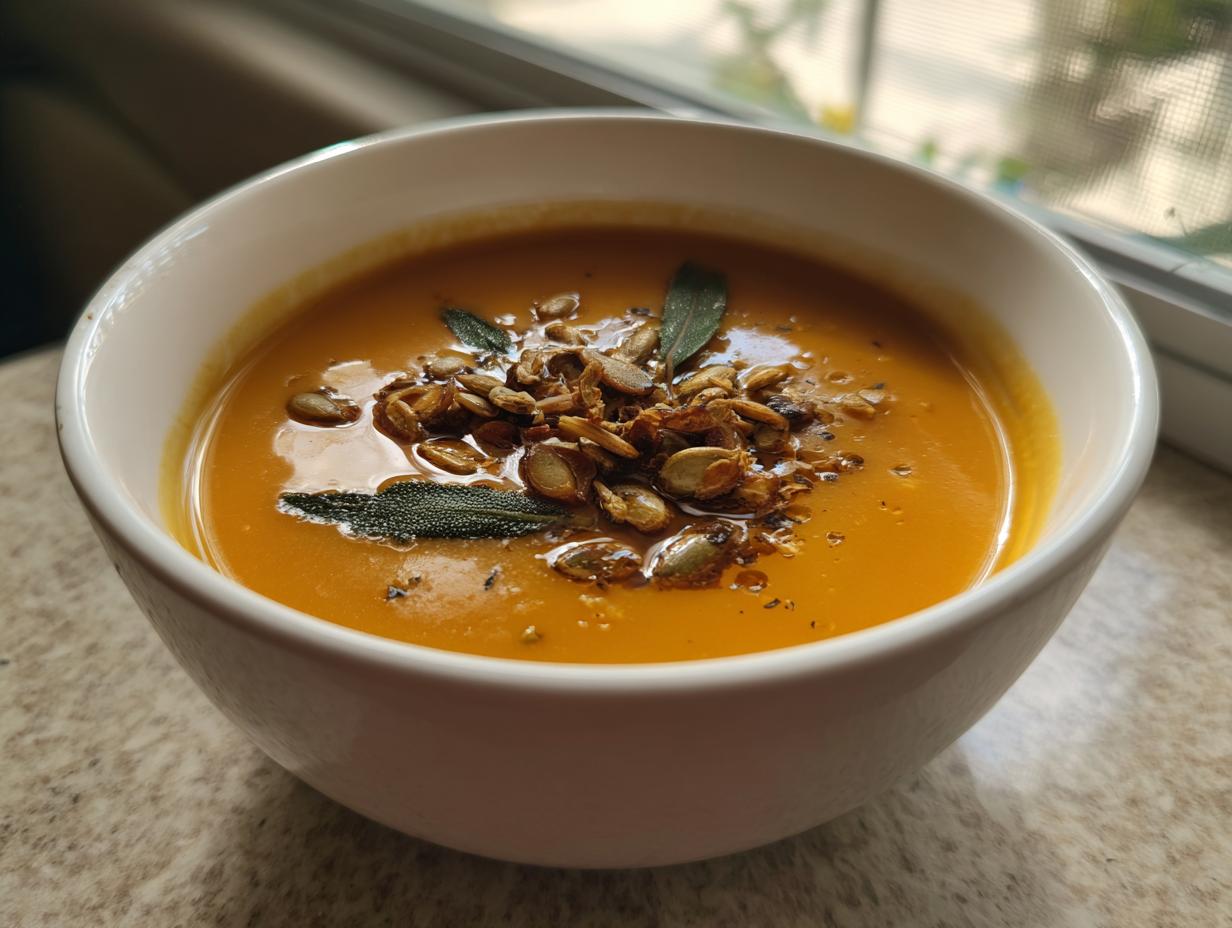
Oh, friends, can you feel it? That little crispness in the air that just begs for a warm, comforting hug in a bowl? Soup season is absolutely my favorite time of year, and while there are a million recipes out there, nothing beats the magic of a truly great roasted butternut squash soup when you’re juggling a busy life. Convenience is tempting, I know, but this recipe is my non-negotiable act of self-care on those rushed weeknights. We aren’t just boiling vegetables here; we’re taking the time to roast them first! That roasting step—it’s magic, honestly—builds this incredible, deep, caramelized sweetness right into the squash. Trust me when I say this dish becomes ultra creamy and wonderfully smooth, all while being surprisingly easy for a delicious homemade soup from scratch. Grab your favorite apron, because we’re making something special today.
If you’re looking for simple ways to bring wellness back to your busy week, check out my guide to quick and easy weeknight dinners—this soup is always at the top of that list!
- Why This Roasted Butternut Squash Soup Recipe Belongs in Your Rotation
- Gathering Ingredients for Your Creamy Roasted Butternut Squash Soup
- Step-by-Step Guide to Making Velvety Smooth Roasted Butternut Squash Soup
- Garnishing Your Roasted Butternut Squash Soup for a Gourmet Finish
- Tips for the Best Roasted Butternut Squash Soup Success
- Storing and Reheating Your Homemade Roasted Butternut Squash Soup
- Variations on This Simple Butternut Squash Dinner
- Frequently Asked Questions About Roasted Butternut Squash Soup
- Understanding the Nutrition in This Comfort Food Soup Idea
Why This Roasted Butternut Squash Soup Recipe Belongs in Your Rotation
I know your schedule is probably packed, just like mine is most days! That’s why this particular roasted butternut squash soup recipe stuck around once I perfected it. It delivers that deeply satisfying, gourmet flavor you think takes hours, but it truly comes together in about an hour total. It’s the easiest way to serve a truly nourishing meal.
Here’s why I call this my go-to comfort food soup idea for the chilly months:
- Zero Heavy Cream Required: Seriously, you get that gorgeous, velvety smooth soup texture just from the squash and the blending process. It’s rich, but totally guilt-free.
- Flavor Explosion from Roasting: That step of caramelizing the squash? That’s where the natural sweetness comes from. It’s far superior to just boiling everything.
- Amazingly Quick: Total time comes in right around 60 minutes. That’s a fantastic return on investment for such a flavorful, healthy winter recipe.
- Easy Weeknight Success: If you can chop vegetables and use a blender, you can nail this recipe perfectly every single time. It’s reliable comfort food!
If you ever need a quick, healthy idea for first thing in the morning, you can peek at my healthy breakfast ideas, but when dinner rolls around and you need warmth, this is the ticket!
Gathering Ingredients for Your Creamy Roasted Butternut Squash Soup
Okay, let’s talk about what you need. Building a truly delicious creamy squash soup starts with quality ingredients, and I’ve tried nearly every combination out there. The beauty of this recipe is how simple the list is, but those prep notes are where the flavor hides! Don’t skip the specifics, or you won’t get that signature velvety smooth soup we’re aiming for.
Here is exactly what you need to pull together this cozy meal:
- The Star: 3 pounds of butternut squash. This is important! It needs to be peeled, seeded, and cubed up nicely—aim for roughly 1-inch cubes so they roast evenly.
- The Foundation Veggies: 1 large yellow onion, chopped (don’t cry over it, it’s worth it!), and 2 carrots and 2 celery stalks, also chopped. These cook down to add depth.
- The Liquid: 4 cups of vegetable broth. I always reach for low-sodium broth because we’re adding salt later, and that gives us total control over the flavor profile.
- The Spice: Just a tiny pinch of 1/4 teaspoon ground nutmeg. This really wakes up the sweetness of the squash!
- Seasoning Staples: 1 teaspoon salt and 1/2 teaspoon black pepper. Don’t measure these too strictly—you’ll adjust at the end.
- For the Garnish (Don’t Skip This!): You’ll need 2 tablespoons of unsalted butter, about 8 whole, fresh sage leaves, and 1/4 cup of pepitas (the raw pumpkin seeds). These toppings make it look gourmet!
If you want some extra help making sure all your vegetables roast up perfectly before they even hit the pot, you absolutely must check out my guide on the perfect roasted vegetables guide. It makes the first step of this roasted butternut squash soup foolproof!
Step-by-Step Guide to Making Velvety Smooth Roasted Butternut Squash Soup
This is where the magic happens! We start building our flavor the right way, way before anything hits the burner. Remember, this whole process takes about 40 minutes of cooking time, plus about 20 minutes of prep, so we are looking at a one-hour turnaround for a truly impressive roasted vegetable soup. It’s structured in three easy acts, and trust me, the payoff is huge.
Roasting the Butternut Squash for Deep Flavor
First things first, preheat that oven to 400°F (200°C). Toss your cubed squash gently with just one tablespoon of olive oil, a sprinkle of salt, and pepper. Pop it onto a sheet pan and let it roast for about 25 to 30 minutes. You aren’t just softening it; you want those edges turning light brown, almost caramelized! That caramelization is the secret sauce that gives you that naturally sweet, gourmet taste without adding any processed sugar. This step is non-negotiable for the best flavor!
Building the Flavor Base on the Stovetop
While the squash is busy getting happy in the oven, let’s get our aromatics talking. Grab your biggest pot or Dutch oven. Heat the last tablespoon of olive oil over medium heat. Toss in your chopped onion, carrots, and celery. You need to let these guys soften up nicely, which usually takes about 8 minutes right there. They are the savory backbone of the soup, so don’t rush them! If you sauté them slowly, your final roasted vegetable soup won’t have any harsh, raw allium flavors hanging around.
Simmering and Achieving the Creamy Squash Soup Texture
Once your squash is fork-tender and beautifully browned, add it right into the pot with your soft veggies. Pour in the vegetable broth and sprinkle in that little bit of nutmeg. Bring it all up to a gentle simmer, then reduce the heat and let it hang out for about 10 minutes so the flavors can really get to know each other. Now, for the texture part! Carefully transfer this mixture to a sturdy blender—and I mean *carefully*, hot liquid expands!
If you’re nervous about blending hot soup (I still jump sometimes!), use an immersion blender right in the pot. Blend until it is absolutely homogenous, silky, and utterly dreamy. That’s how we guarantee that wonderfully creamy squash soup texture! Taste it afterward—this is your moment to adjust salt and pepper until it sings.
If you want to see how I handle another fantastic, flavorful seasonal pot meal, my Zuppa Toscana recipe is another winner for a cozy night!
Garnishing Your Roasted Butternut Squash Soup for a Gourmet Finish
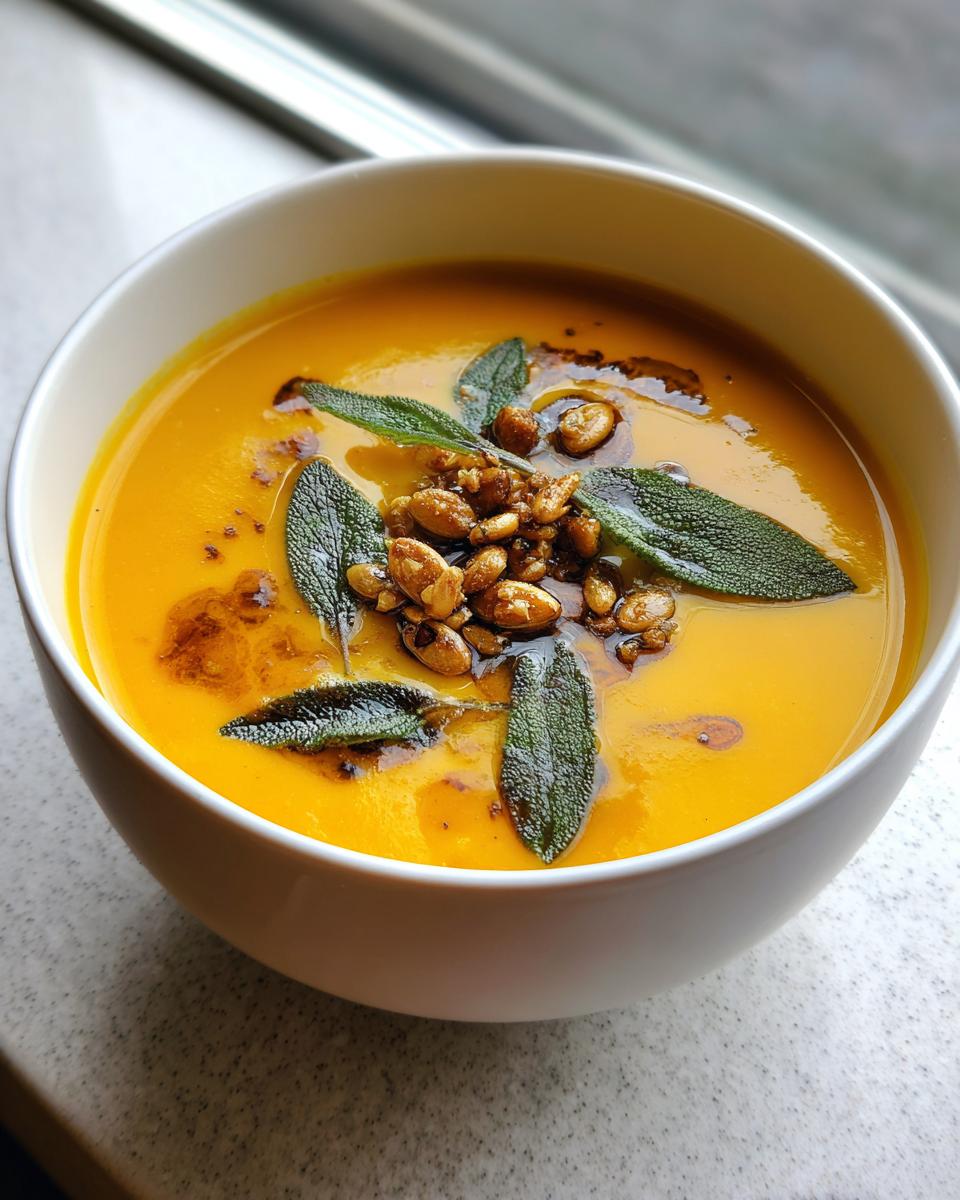
Okay, listen to me: a beautiful **roasted butternut squash soup** can go from “tasty dinner” to “WOW, did you make this in a restaurant?” just by finishing it right. We’re not just serving plain orange liquid here. That 2 tablespoons of butter and the handful of fresh sage leaves? That’s our secret weapon for creating **gourmet soup ideas** right in your own kitchen.
We are making Sage Brown Butter, and it’s easier than you think. Get a tiny skillet hot over medium heat and toss in that butter. It will melt, foam up, and then the foaming will die down. You need to watch closely now! You’re waiting for that beautiful aroma—that nutty, toasted smell—and tiny, light brown specks to appear at the bottom of the pan. As soon as it smells nutty and looks golden brown, pull it off the heat immediately so it doesn’t burn!
Once you pull the butter off the heat, drop in those fresh sage leaves. They’ll sizzle and crisp up instantly. Remove the crisp sage leaves and set them on a paper towel. They become like little herby chips—so amazing!
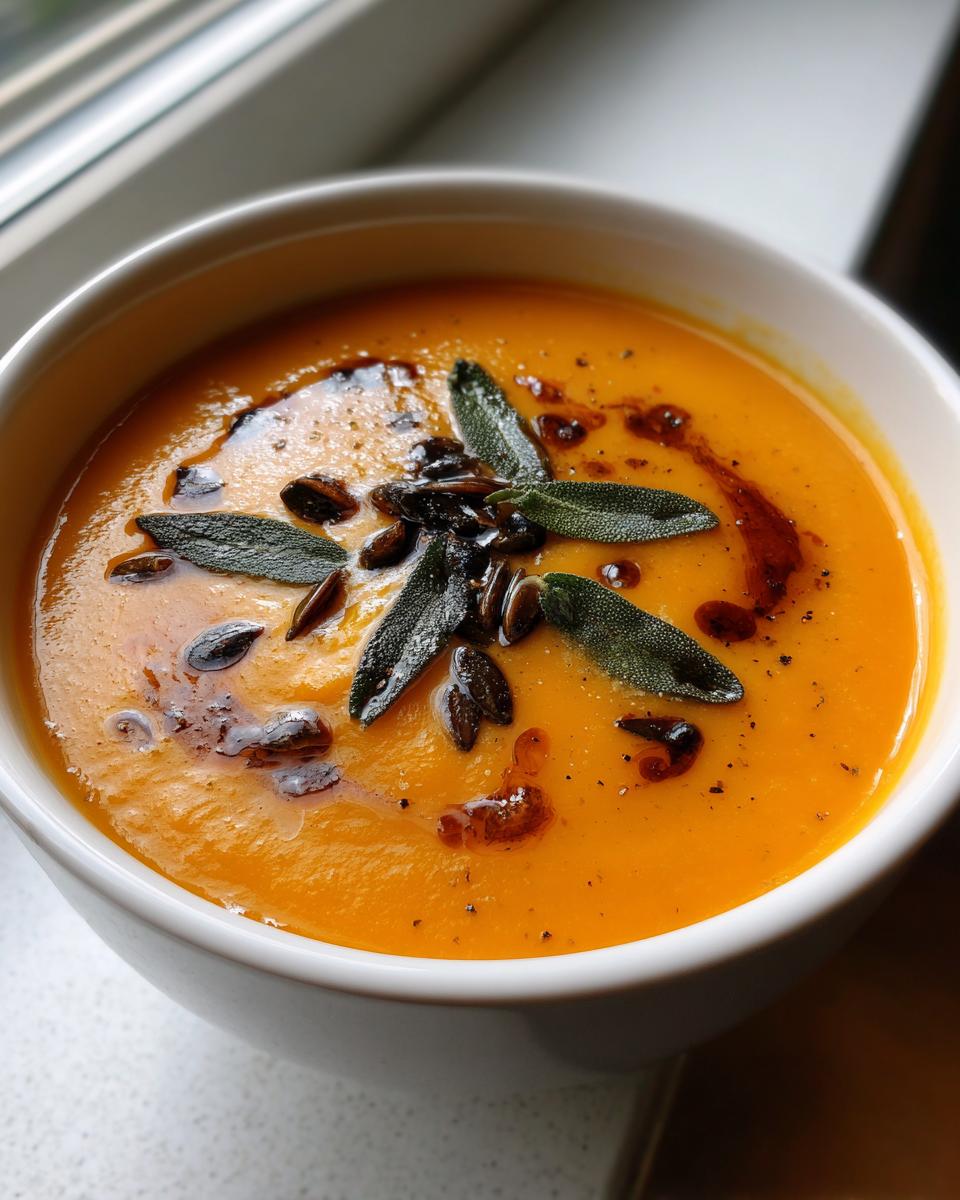
Next up: the pepitas. Toss those pumpkin seeds right into that same little skillet! Even if there’s a tiny bit of leftover browned butter, embrace it. Toast them over medium heat, stirring constantly, until you hear them start to gently pop. This usually takes about 3 minutes. They get crunchy and warm, and they offer the perfect textural contrast to the silky soup.
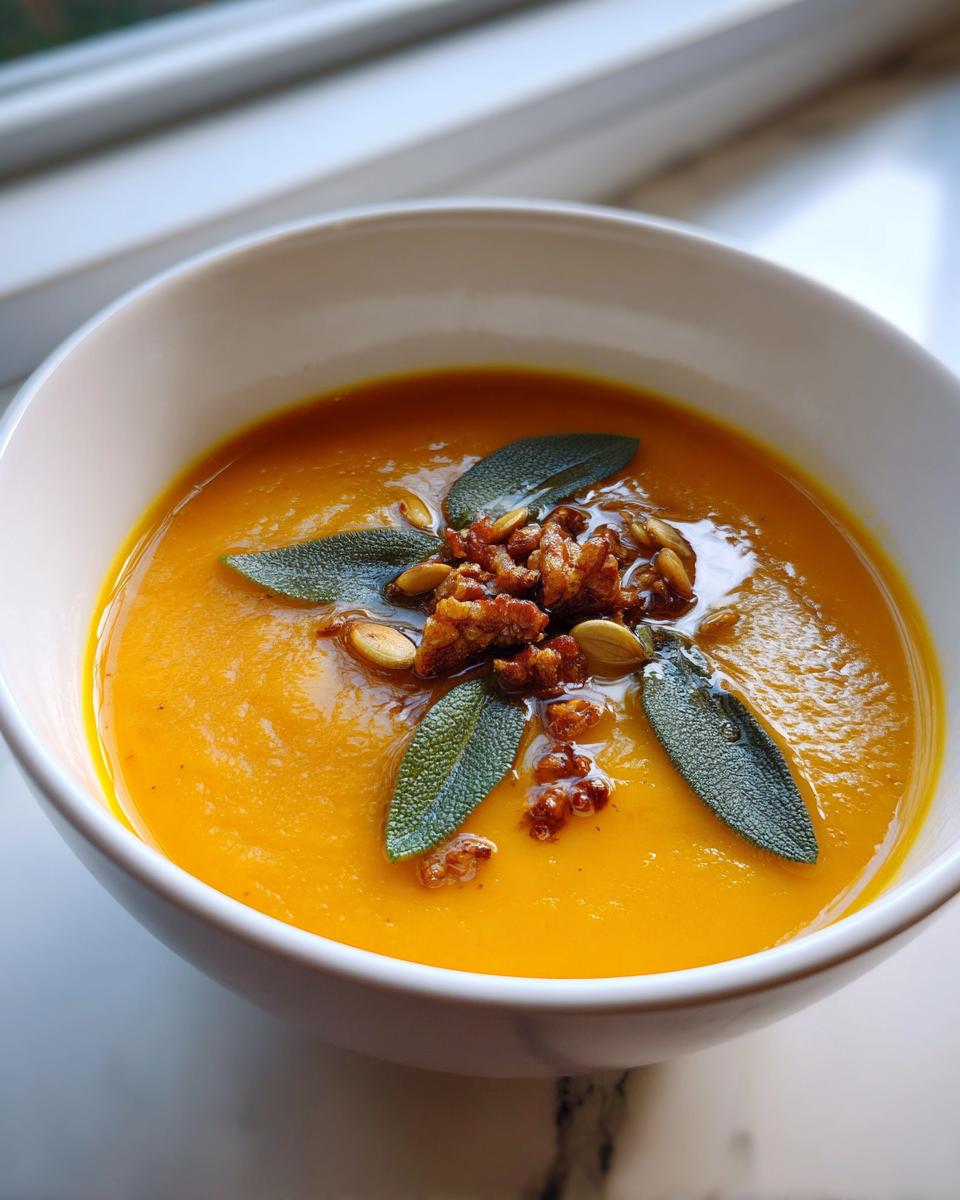
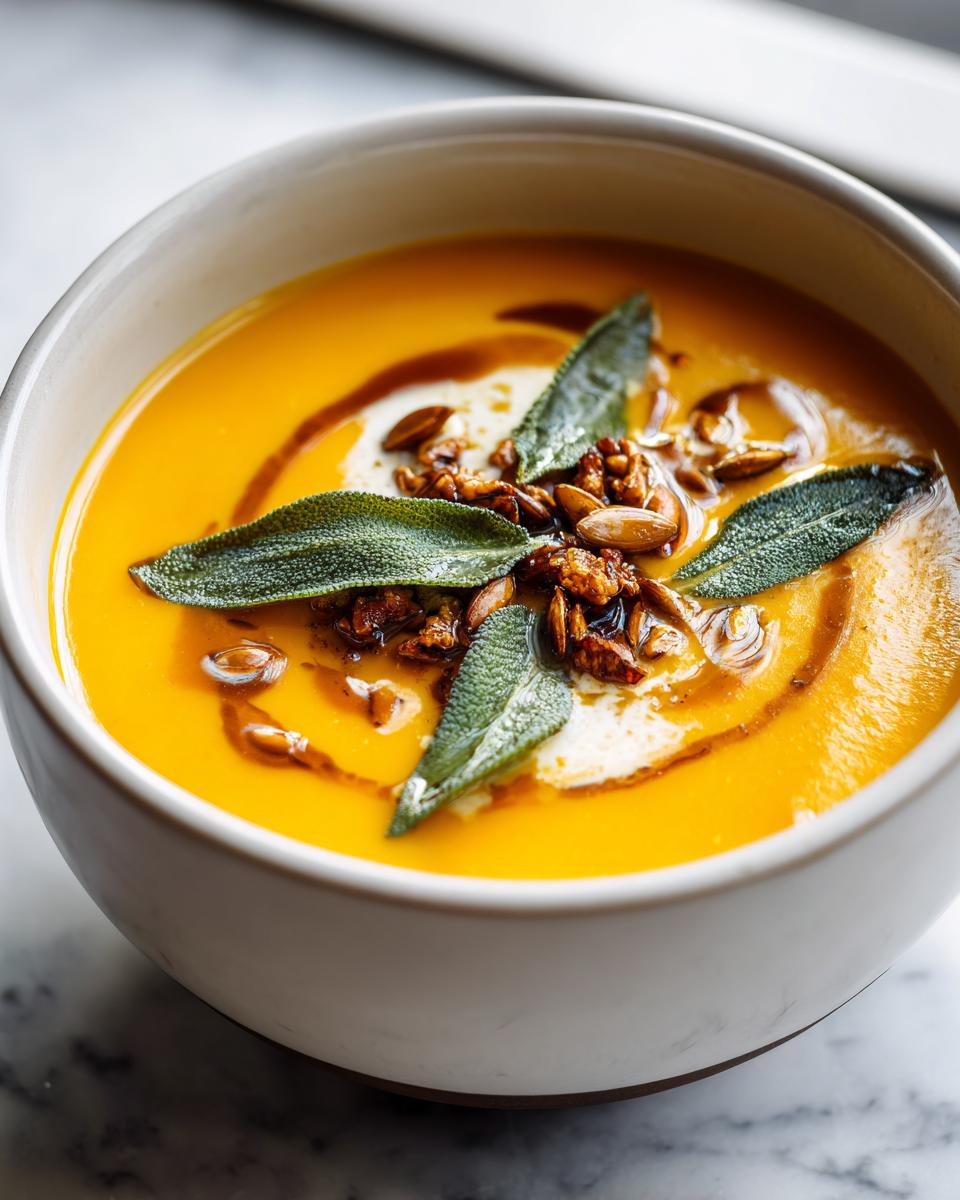
When you’re ready to serve, ladle up that **velvety smooth soup**, give each bowl a little drizzle of that smoky brown butter, scatter those crispy sage leaves on top, and finish with a sprinkle of the toasted pepitas. It takes literally two minutes, but it transforms the whole experience. If you love that deep, developed flavor from browned ingredients, you have to try my recipe for caramelized onion pasta next!
Tips for the Best Roasted Butternut Squash Soup Success
Even though this is an **easy fall soup recipe**, there are a couple of little things I learned over the years trying to make the absolute perfect bowl. Remember, we’re aiming for that rich, deeply satisfying flavor, and sometimes a tiny tweak makes all the difference in turning a good soup into something you talk about all winter long.
If you’re looking for simple ways to level up your dessert game after dinner, check out my guide for easy no-bake recipes! But back to soup perfection for now.
Here are my three top pieces of advice for ensuring your **roasted butternut squash soup** is a total success:
- Don’t Fear the Browning on the Squash: When you pull that baking sheet out of the oven, you want to see lovely brown spots on the squash cubes. That caramelized color equals deep, natural sweetness. If your squash looks pale, it means you didn’t let it roast long enough, and your final soup will taste flatter. Don’t be shy!
- The Coconut Milk Creaminess Hack: If you happen to have a craving for something even *richer* than usual—maybe it’s a particularly chilly night, or you’re serving guests—you can swap out half of your vegetable broth for full-fat coconut milk. It sounds strange, but the flavor blends beautifully with the squash and nutmeg and gives you that luxurious mouthfeel without adding dairy cream. It keeps this a beautiful **healthy winter recipe**!
- Nutmeg Timing Matters: I put the nutmeg in before simmering, but honestly, if you want the brightest spice flavor, add half the nutmeg before blending, and then whisk in the other half right at the very end, just before serving. It hits your palate differently and adds a wonderful layer of warmth to this **simple butternut squash dinner**.
Follow these little points, and you won’t just have leftovers; you’ll have a deeply flavorful, comforting meal that tastes like you spent all day on it!
Storing and Reheating Your Homemade Roasted Butternut Squash Soup
The best part about making a big batch of **homemade soup from scratch**? Leftovers! Seriously, I think this **roasted butternut squash soup** tastes even better the second day once all those roasted flavors have had time to completely mingle. We want to make sure we keep that wonderful texture intact, though, so here are my personal rules for storage.
It’s so easy to pair this with something fun during the week—like my quick Southwest sweet potato skillet if you want a carb-free lunch! But when it comes to the soup itself, keeping it smooth is key.
Refrigerating for Quick Weeknight Soups
For the fridge, let your soup cool down on the counter for about an hour first. Never put a huge pot of hot liquid straight into the fridge; it’s not good for either the soup or your fridge’s temperature stability! Once it’s just warm to the touch, move it into airtight containers. It will keep beautifully for about five days. When you reheat it on the stovetop (my preferred method!), keep the heat at a gentle simmer. If it seems too thick after a couple of days, just whisk in a splash of water or a little extra broth to loosen it back up to that perfect consistency.
Freezing for Future Comfort
If you made a double batch for the freezer—and you totally should—make sure the soup is completely cool before you transfer it. I love using heavy-duty, zipper-top bags for the freezer because they lay flat and save so much room! Just leave about an inch of headspace at the top because liquids expand when they freeze solid. These are excellent for up to three months!
When you’re ready to enjoy your frozen batch of **roasted butternut squash soup**, the best reheating method is thawing it overnight in the fridge first. Then, use low heat on the stove, stirring frequently, until it’s warmed through. If you try to thaw it too fast on high heat, sometimes the texture can separate slightly, but gentle warming is always my secret for bringing back that **velvety smooth soup** quality.
Variations on This Simple Butternut Squash Dinner
I love that this recipe is the perfect canvas for tweaking! While I am obviously devoted to the sage brown butter finish, this simple butternut squash dinner is so flexible. It handles seasoning changes like a champ, which is terrific because sometimes you need a flavor shift, even in your favorite roasted butternut squash soup.
For instance, if you made a big pot and want it to feel completely different the next night, try switching up the spices! A little pinch of smoked paprika or even a tiny bit of ground turmeric when you add the broth can take it in a totally different, slightly smoky, direction. If you’re feeling bold, I sometimes toss in a teaspoon of mild curry powder during the simmer—it pairs magically with the natural sweetness of the squash.
If you are hosting friends who follow different eating plans, making it fully plant-based is incredibly easy. Since we skipped the heavy cream for natural creaminess, the main swap is easy. For the garnish, just skip the butter entirely and use olive oil for toasting those pepitas. And if you used chicken broth instead of veggie broth initially, swapping in a quality vegetable broth makes this a fantastic vegetarian soup recipe. The texture remains perfect!
Speaking of vegetarian soups, if you are looking for another robust, flavorful, meat-free centerpiece for your dinner table, you absolutely have to try my recipe for the hearty vegetarian lentil soup. It has that same deep, satisfying warmth!
Adding Heat: A Kick for Your Creamy Soup
Sometimes I’m just craving a little heat, you know? If you want to turn up the temperature on this creamy squash soup, don’t just dump in red pepper flakes at the end. That can look messy and taste sharp. Instead, sauté a finely minced jalapeño right along with your onions, carrots, and celery in Step 2.
By softening the pepper in the oil first, its flavor will cook down and infuse the whole soup beautifully without leaving harsh hot spots. If you want a big punch, you can also add half a teaspoon of cayenne pepper when you add the nutmeg during the simmering step. Be careful with cayenne, though—a little goes a long way!
Ginger: The Unexpected Bright Note
Okay, this is one of my new favorites for a twist on the classic **butternut squash soup recipe**. When you are sautéing your base vegetables (onion, carrot, celery), throw in a tablespoon of fresh, finely grated ginger root. It cuts through the richness of the squash just perfectly and adds this gorgeous, bright, almost zesty lift to what is usually a very heavy, earthy soup.
Ginger and squash are genuinely soulmates, and I promise, it doesn’t make the soup taste overtly like something Asian cuisine—it just makes your roasted butternut squash soup taste *fresher* and more vibrant. It’s a must-try twist for colder days!
Frequently Asked Questions About Roasted Butternut Squash Soup
I get asked variations on the same few things all the time, which tells me exactly what you food lovers are worried about when you try a new **butternut squash soup recipe**! It’s totally normal to have questions, especially when you’re aiming for that rich, comforting experience. I’ve collected the most common ones right here so you can serve up your **simple butternut squash dinner** with total confidence.
If you’re prepping these amazing leftovers for the office, make sure you check out my tips on simple lunch recipes for packing ideas!
Can I make this easy fall soup recipe without roasting the squash first?
Oh, you certainly *can* skip the roasting step if you are in a crazy rush—it will turn this into one of those ultra-quick weeknight soups. However, if you skip it, you are missing the entire point of making this the best autumn soup! Roasting the squash is what transforms it. It concentrates the sugars, giving you that amazing, natural sweetness and those deep, caramelized notes. If you just boil or steam the squash, your final **creamy squash soup** will be fine, but it will taste kind of flat and watery compared to this version. Please, try to sneak those 30 minutes in for roasting; it’s worth the difference between good and absolutely incredible!
Is this a good vegetarian soup recipe?
Yes, absolutely! By default, this **roasted butternut squash soup** is a fantastic **vegetarian soup recipe**. We use vegetable broth, and there’s no meat added anywhere in the main pot. The only thing you’d need to look at is the garnish, since I call for unsalted butter to make the sage brown butter.
If you need it to be totally plant-based or vegan, just skip the butter entirely for the garnish. You can use a teaspoon of your best olive oil, or even a tiny dab of vegan butter replacement, to toast your seeds and sage leaves. You still get that nutty flavor, just without the dairy. See? It’s so adaptable!
Why does this soup taste so naturally sweet?
That deep, inherent sweetness comes almost entirely from that first step: roasting the squash! When you expose the sugars in the butternut squash to high, dry heat (like in the oven), you get caramelization. This process naturally concentrates and deepens the flavor, creating a rich, earthy sweetness that you just can’t replicate by boiling the squash in liquid. That’s what makes this **naturally sweet soup** taste complex and gourmet without needing to load it up with extra sugar later on. It’s simple chemistry working for us!
Understanding the Nutrition in This Comfort Food Soup Idea
I always try to keep things transparent here at Pure Plate Path, because enjoying comfort food shouldn’t mean guessing what’s fueling you. This **roasted butternut squash soup** is packed with fiber from all those lovely vegetables, which really makes it satisfying. It’s why I recommend it constantly as part of a truly nourishing meal plan!
We focus on whole ingredients, so you’re getting great vitamins and minerals, but it’s always good to know the breakdown, right? This helps you if you are meal prepping or making choices for the week.
Here are the estimated nutritional facts for a standard serving size. Remember, this is an estimate based on the ingredients I listed above—the exact amounts can shift slightly based on the size of your squash or how much broth you use up when simmering!
- Serving Size: 1.5 cups (That’s a generous bowl!)
- Calories: Around 245
- Fat: 12g (Mostly healthy fats from the olive oil and the garnish butter)
- Saturated Fat: Only 3g
- Carbohydrates: 32g
- Fiber: 8g (Hello, digestive health!)
- Protein: 6g
- Sugar: 10g (And remember, this is almost entirely *natural* sugar from the roasted squash!)
- Sodium: 450mg (This is why I always tell you to use low-sodium broth!)
If you’re looking for a lighter sweet treat to pair with your dinner or for a weekend project, check out my guide on healthy desserts—we focus on flavor without the guilt over there, too!
PrintUltra Creamy Roasted Butternut Squash Soup with Sage Brown Butter
Make this ultra creamy roasted butternut squash soup for a deeply comforting and healthy fall meal. Roasting the squash brings out natural sweetness, creating a velvety smooth texture without heavy cream.
- Prep Time: 20 min
- Cook Time: 40 min
- Total Time: 60 min
- Yield: 6 servings 1x
- Category: Dinner
- Method: Roasting and Stovetop
- Cuisine: American
- Diet: Vegetarian
Ingredients
- 3 lb butternut squash, peeled, seeded, and cubed
- 2 tablespoons olive oil
- 1 large yellow onion, chopped
- 2 carrots, chopped
- 2 celery stalks, chopped
- 4 cups vegetable broth
- 1 teaspoon salt
- 1/2 teaspoon black pepper
- 1/4 teaspoon ground nutmeg
- 2 tablespoons unsalted butter (for garnish)
- 8 fresh sage leaves (for garnish)
- 1/4 cup pepitas (pumpkin seeds, for garnish)
Instructions
- Preheat your oven to 400°F (200°C). Toss the cubed butternut squash with 1 tablespoon of olive oil, salt, and pepper on a baking sheet. Roast for 25 to 30 minutes, or until the squash is tender and lightly caramelized.
- While the squash roasts, heat the remaining 1 tablespoon of olive oil in a large pot or Dutch oven over medium heat. Add the chopped onion, carrots, and celery. Cook until the vegetables soften, about 8 minutes.
- Add the roasted butternut squash, vegetable broth, and nutmeg to the pot. Bring the mixture to a simmer, then reduce the heat and cook for 10 minutes to allow flavors to combine.
- Carefully transfer the soup mixture to a blender, or use an immersion blender directly in the pot. Blend until the soup is completely smooth and velvety. Return the soup to the pot if necessary. Taste and adjust salt and pepper.
- Prepare the garnish: In a small skillet, melt the 2 tablespoons of butter over medium heat. Add the sage leaves and cook until the butter browns slightly and the sage becomes crisp, about 2 minutes. Remove the sage leaves and set aside. Add the pepitas to the same skillet and toast until they begin to pop, about 3 minutes.
- Ladle the hot soup into bowls. Drizzle with the sage brown butter and top with the toasted pepitas and crisp sage leaves.
Notes
- Roasting the squash first is key to developing the deep, natural sweetness that makes this soup taste gourmet.
- For an extra rich texture, you can substitute half the vegetable broth with full-fat coconut milk.
- This soup freezes well for up to three months; cool completely before storing in airtight containers.
Nutrition
- Serving Size: 1.5 cups
- Calories: 245
- Sugar: 10
- Sodium: 450
- Fat: 12
- Saturated Fat: 3
- Unsaturated Fat: 9
- Trans Fat: 0
- Carbohydrates: 32
- Fiber: 8
- Protein: 6
- Cholesterol: 8