
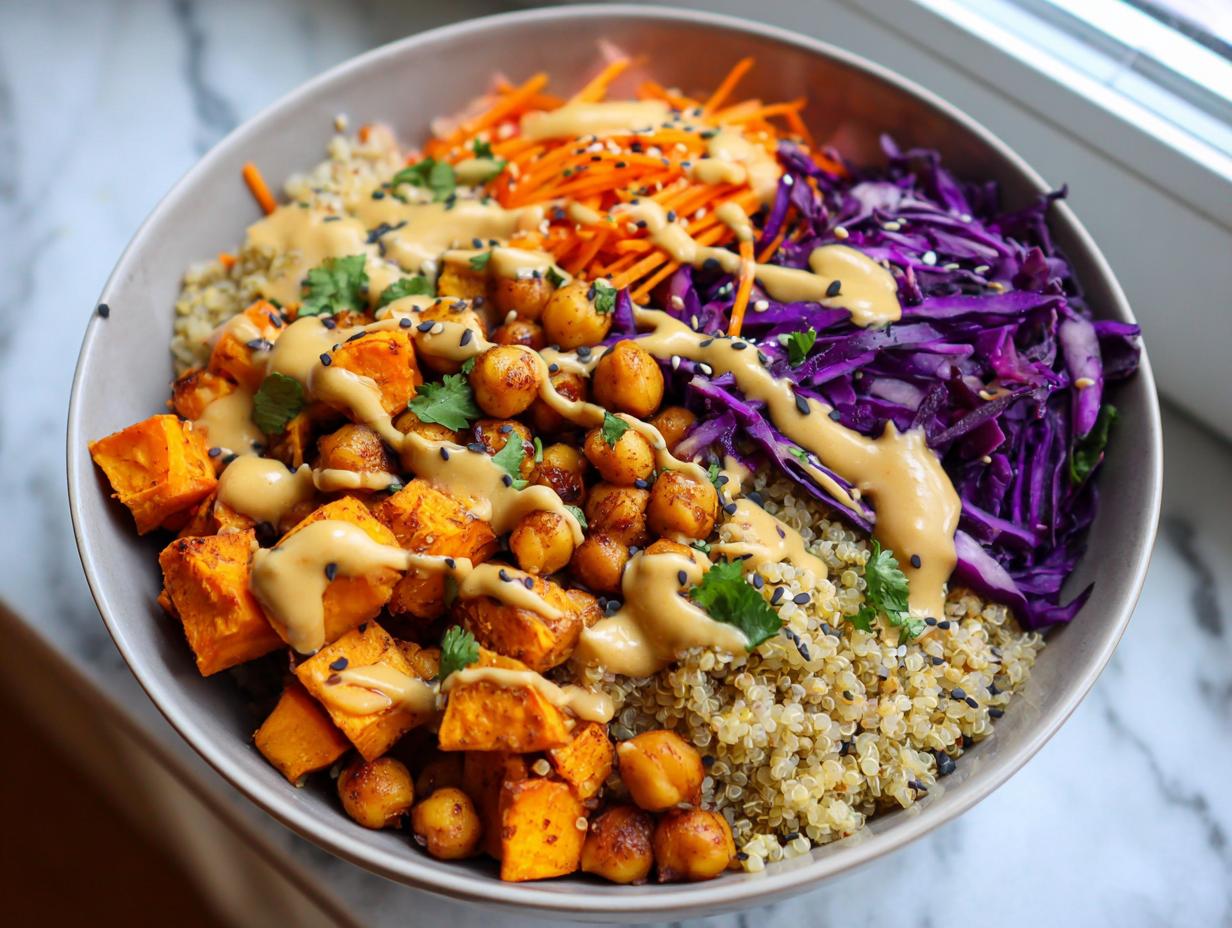
Honestly, doesn’t it feel sometimes like our schedules are just running us ragged? Between work deadlines and family life, finding time to actually sit down to a meal that feels both quick and genuinely good for you feels impossible. That’s exactly why I created Pure Plate Path—to take the stress right out of eating well. When I was deep in my marketing career, grabbing takeout was the norm, and I felt awful! This Thai Peanut Sweet Potato buddha bowl is the absolute perfect answer: it’s complex in flavor but incredibly simple to put together, ideal for those days when you need real fuel fast. It was born from my own need to reclaim my energy, turning simple ingredients into something that genuinely nourishes mind and body right when I need it most.
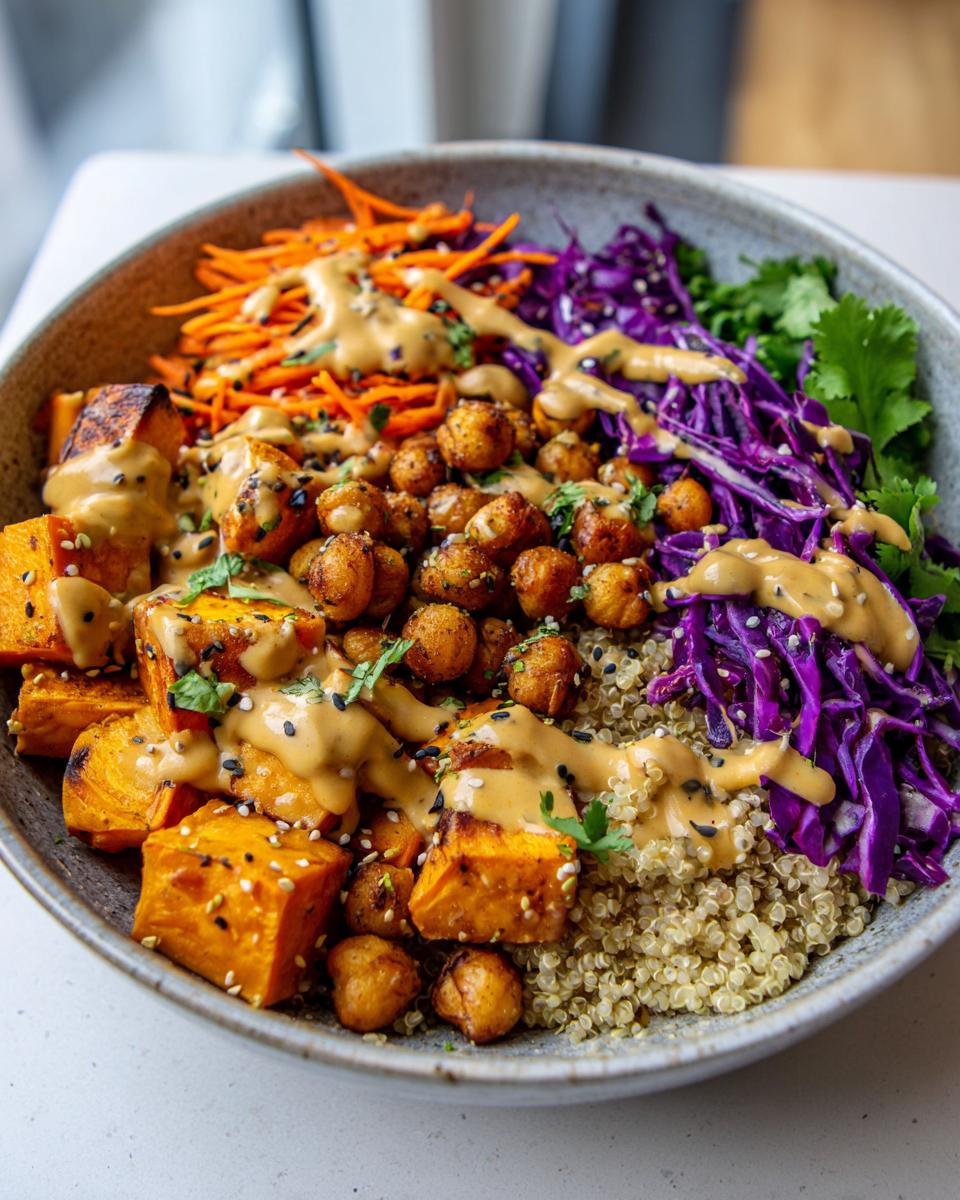
If you’re looking for ways to make healthy eating simpler during the week, you’ll find tons of inspiration for quick, balanced dishes over in my simple lunch recipes collection too!
- Why This Thai Peanut Sweet Potato Buddha Bowl is Your New Favorite
- Gathering Ingredients for Your Buddha Bowl
- Step-by-Step Instructions to Make the Thai Peanut Buddha Bowl
- Tips for Perfect Easy Meal Prep Bowls
- Customizing Your Buddha Bowl: Variations and Swaps
- Serving Suggestions for Your Nourish Bowls Recipes
- Frequently Asked Questions About the Buddha Bowl
- Nutritional Estimates for This Sweet Potato Bowl Ideas
- Share Your Thai Peanut Buddha Bowl Creations
Why This Thai Peanut Sweet Potato Buddha Bowl is Your New Favorite
Why should this Thai Peanut Sweet Potato buddha bowl be your absolute go-to? Because it checks every single box for a busy person trying to eat clean! It brings that incredible Thai flavor we all crave, it’s completely vegan, and we’ve built in an easy gluten-free swap. Plus, it’s designed specifically for packing up and taking with you.
- Intense, zesty Thai Peanut flavor that keeps things exciting.
- Perfectly plant-based and easily adaptable for a gluten free bowl recipe.
- It handles meal prep like a champion!
If you are scrambling for fast weeknight inspiration, you can see more ideas to get dinner on the table quickly in my guide to quick, easy weeknight dinners!
Quick Prep Time and Total Time Breakdown
Seriously, this is speedy food disguised as something gourmet. We’re looking at only 15 minutes of active prep time here. Throw in 25 minutes to roast those gorgeous sweet potatoes, and you have a full, satisfying bowl ready in just about 40 minutes total. That’s why this counts as one of my favorite quick dinner bowls—it beats almost any drive-thru!
Gathering Ingredients for Your Buddha Bowl
Okay, let’s talk about what we need. For me, making sure the ingredients are right is key—it’s what separates a *good* bowl from a truly memorable one. Clarity here is vital, especially if you’re planning on making these for your healthy breakfast ideas rotation, even though this is a lunch favorite!
We need to organize things into three main groups so nothing gets missed in the rush.
Ingredients for the Quinoa Base and Roasted Sweet Potato Bowl Components
First up, the structure of our buddha bowl. For the grain base, grab 1 cup of quinoa and 2 cups of water or broth. Then come the stars of the show: 2 medium sweet potatoes, which absolutely *must* be cubed—none of that messy chopping while the oven preheats! Toss those with 1 tablespoon of olive oil, a teaspoon of smoked paprika if you want that extra depth, and salt. Don’t forget the protein element: one 15-ounce can of chickpeas that are rinsed and drained well. Finally, we need some crunch and color: 1 cup shredded red cabbage, 1 cup shredded carrots, and some fresh cilantro for garnish.
Crafting the Best Buddha Bowl Sauces: Thai Peanut Dressing
This sauce is what truly makes these nourish bowls recipes sing! You’ll need 1/2 cup of smooth peanut butter. Whisk that together with 1/4 cup of warm water until it starts coming together. Next, add the flavor punch: 3 tablespoons of soy sauce—and here’s a BIG note for anyone needing gluten free bowl recipes, use tamari instead! Follow that with 2 tablespoons of rice vinegar, 1 tablespoon of maple syrup for sweetness, 1 teaspoon of grated fresh ginger, and 1 clove of garlic, minced fine. Keep whisking until it’s perfectly smooth and drizzle-ready!
Step-by-Step Instructions to Make the Thai Peanut Buddha Bowl
It’s time to put it all together! This is where the magic happens, and trust me, you want to move with a little organized rhythm here so you can finish around the 40-minute mark. Remember, we prepped everything, so now it’s just coordinating the cooking times. If you want the absolute best guide on getting your veggies roasted perfectly, you should check out my notes on perfect roasted vegetables guide; it helps so much with getting that caramelized exterior!
Cooking the Quinoa Base for Your Buddha Bowl
First things first, get that grain going! Pop your cup of quinoa and two cups of water or broth into a saucepan. Bring it right up to a boil over high heat. Once it’s bubbling happily, drop that heat down to low, cover it tightly, and let it simmer away for about 15 minutes. Don’t peek! When the time is up and the liquid is gone, take it off the heat and let it sit, still covered, for another few minutes. Then, uncover it and fluff it up gently with a fork. Perfect foundation for our buddha bowl!
Roasting the Sweet Potatoes for the Buddha Bowl
While the quinoa is doing its thing, get your oven warmed up to 400°F (200°C). Take those cubed sweet potatoes and toss them right there on the baking sheet with your olive oil, smoked paprika, and salt until they’re coated nicely. Spread them out so they aren’t crowding each other—that’s key for roasting! Slide them in and let them roast for 20 to 25 minutes. Make sure you turn them halfway through their cooking time. This flipping action ensures they get beautifully tender and caramelized all over, which adds such great texture to the final buddha bowl.
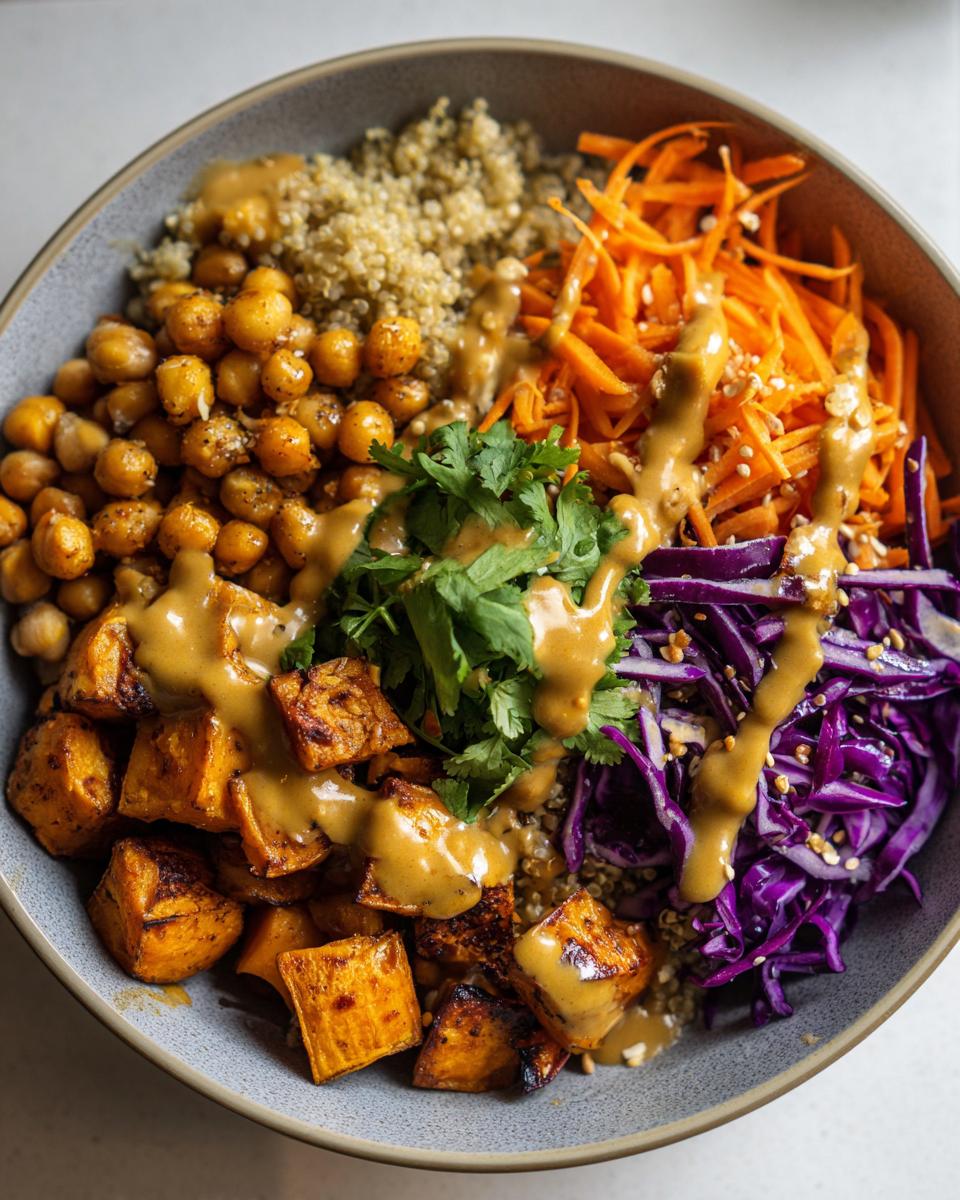
Mixing the Creamy Thai Peanut Sauce
While the potatoes are caramelizing, whisk up that superstar sauce. In your small bowl, start by combining the peanut butter with 1/4 cup of warm water. Whisk aggressively until you get a decent paste. Now, slowly incorporate the soy sauce (or tamari!), rice vinegar, maple syrup, ginger, and garlic. Keep whisking until everything is totally smooth. If it seems too thick to drizzle nicely over your buddha bowl, add a tiny bit more warm water, just one teaspoon at a time, until it flows beautifully.
Assembling Your Balanced Meal Bowls
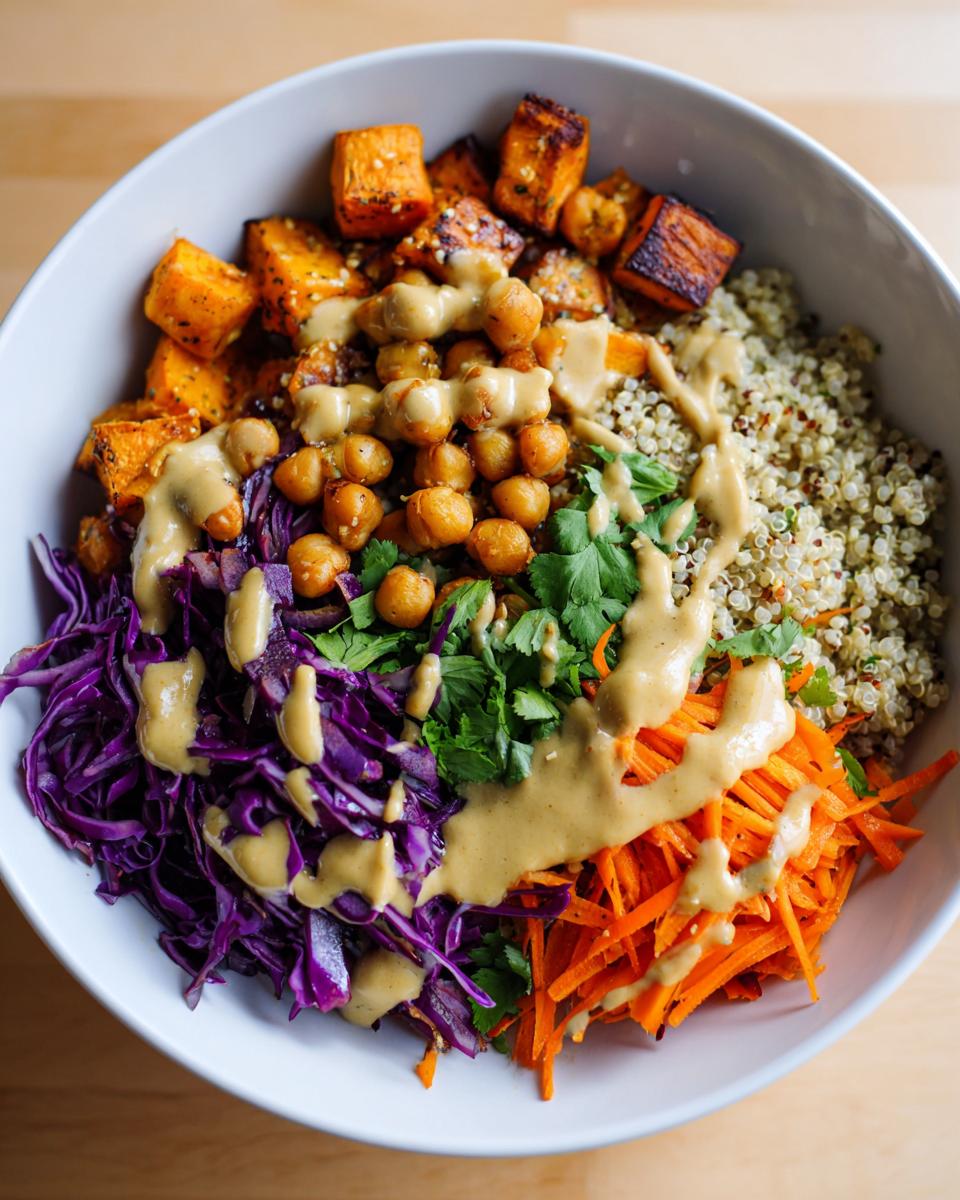
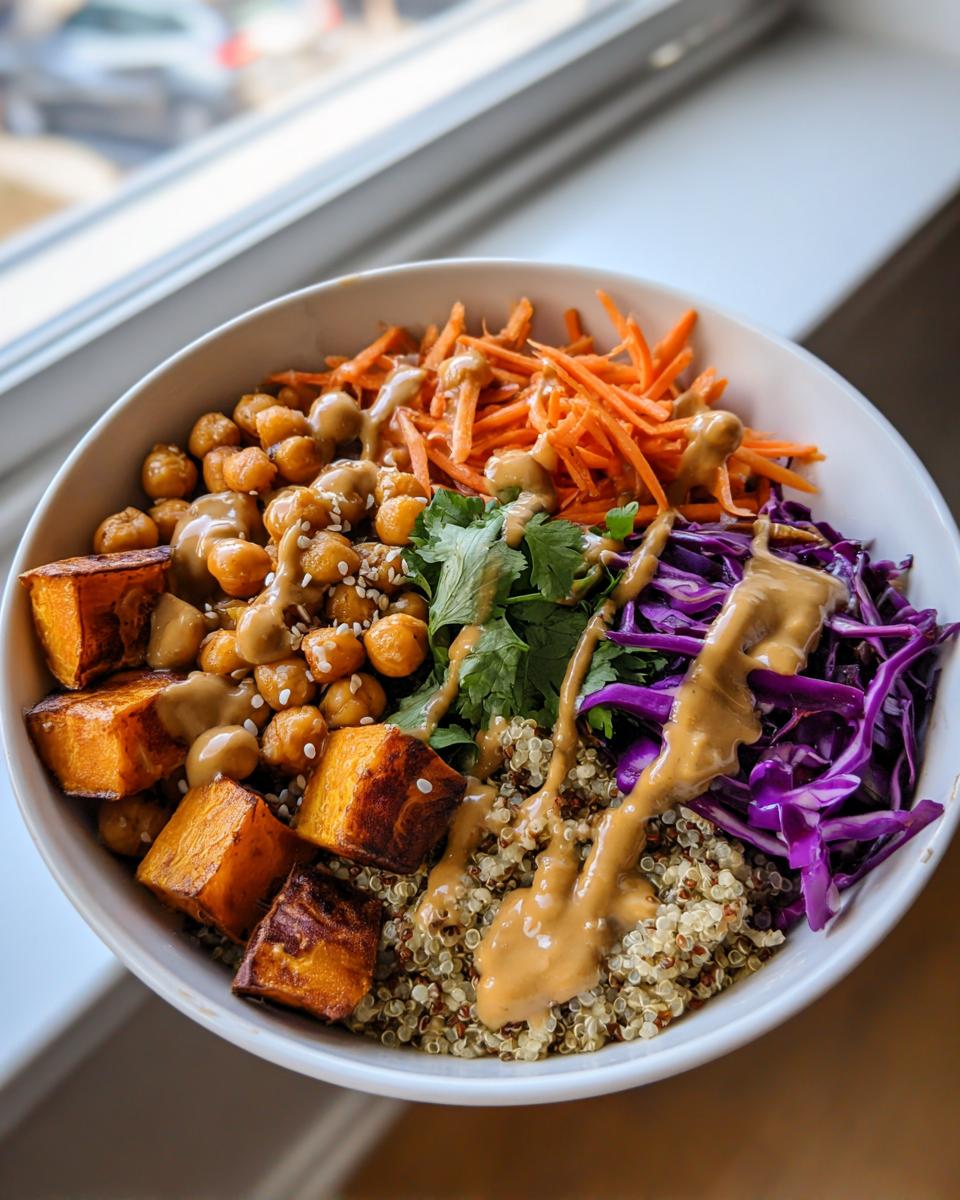
Alright, everything is ready! Grab your four serving dishes—this is where your beautiful work pays off. Divide the cooked quinoa evenly among them to create the base. Next, neatly arrange the roasted sweet potatoes, the rinsed chickpeas, the shredded cabbage, and the carrots over the quinoa. Don’t just dump them on; try to keep the components slightly separate so you get that colorful, appealing arrangement. Finally, take that gorgeous Thai peanut sauce and drizzle a generous amount over every component in the bowl. Finish it off with a sprinkle of fresh cilantro. Wow, what a stunning presentation for your balanced meal bowls!
Tips for Perfect Easy Meal Prep Bowls
Making this stellar Thai Peanut Sweet Potato Bowl ahead of time? That’s just smart cooking, honestly! This recipe is one of my go-to easy meal prep bowls because the components keep really well, but you have to be a little careful about texture. The biggest tip I can give you for vibrant, crisp vegetables is to absolutely store the creamy peanut sauce separately. Don’t mix it in until the very moment you’re ready to eat! If the sauce sits on the cabbage and carrots, they get soggy fast, and we want crunch!
When you’re packing these up for lunches throughout the week, place your grains, roasted veggies, and raw veggies into the containers. I suggest keeping the sauce container small and tucking it right alongside the bowl. It keeps everything fresh until lunch hour hits.
Now, if you’re looking for this to be a true powerhouse meal that holds you over until dinner—which it should!—you can easily boost the staying power. If you want a higher protein bowl recipe, I highly recommend adding baked or pan-seared tofu right alongside those chickpeas. Or, if you have some edamame lying around, a handful tossed in makes these incredible high protein bowl recipes. Tofu cubes roast up beautifully at the same time as your sweet potatoes, so you can barely add any extra time to your cook session!
Customizing Your Buddha Bowl: Variations and Swaps
It’s funny, I love this Thai Peanut recipe so much, but if I eat the same thing every day, I get bored! That’s the beauty of the buddha bowl format; it’s totally flexible. Think of our recipe as the blueprint, not a final decree. You can keep your routine fresh easily!
If you’re swimming in brown rice leftover from last night, go right ahead and swap it for the quinoa. Brown rice works wonderfully and gives you a different chewiness. Or maybe sweet potatoes aren’t doing it for you this week? Try roasting broccoli florets with the same smoked paprika and oil, or maybe some chunks of butternut squash. They caramelize just as nicely!
We already talked about adding tofu for protein, which is fantastic for those plant based bowl dinners, but sometimes I just want something lighter. A big handful of fresh spinach or some massaged kale mixed into the base can bulk up the greens content instantly. For more ideas on fresh greens, I always have tons of inspiration saved over in my salad recipes section.
Gluten Free Bowl Recipes Considerations
Because we want everyone to enjoy this, let’s touch back on keeping this a certified gluten free bowl recipe—it’s actually super easy, but one small detail can trip you up!
The sauce is covered: using tamari instead of regular soy sauce handles that main flavor component perfectly. But remember the grain? If you have severe sensitivity, always look for quinoa that is specifically certified gluten free. Sometimes the processing facilities handle wheat, so if you need this to be totally safe, always check for that certification on the package.
It’s that simple! A tiny swap here, a different vegetable there, and suddenly you have a totally customized, satisfying vegan power bowl that still hits every nutritional mark we aimed for.
Serving Suggestions for Your Nourish Bowls Recipes
Now that you’ve poured that gorgeous peanut sauce over your perfectly assembled Thai Peanut Sweet Potato buddha bowl, you might wonder what else goes on the table. The beauty of a well-built nourish bowls recipe like this is that it’s already a complete, balanced meal—it really doesn’t need anything else. It has your complex carb, your healthy fats, your protein from the chickpeas, and tons of vitamins from the cabbage and carrots!
However, when I serve these for dinner, sometimes I like to have something light and totally crisp on the side just to cut through that richness of the peanut sauce. It makes the whole meal feel even more vibrant.
For example, something super simple like a small, bright green salad is perfect. I often whip up a quick vinaigrette for that. If you want to try something slightly different from the Asian profile we have here, you should absolutely check out my recipe for that pear salad with goat cheese. It offers a lovely sweet and tangy contrast to the savory, nutty flavors of the bowl!
As for drinks, honestly, keep it simple. A big glass of cold water with a slice of lemon or maybe a lightly sweetened iced green tea is all you need to keep things clean and let the flavors of your buddha bowl truly shine through.
Frequently Asked Questions About the Buddha Bowl
I always get a ton of questions once people start making these Thai Peanut Sweet Potato Bowls! It’s so exciting to see everyone diving in and customizing their meals. Here are a few things I hear most often when folks are first figuring out how to build a buddha bowl or trying to keep their healthy buddha bowls exciting week after week.
What is the ideal ratio when assembling a buddha bowl?
This is the million-dollar question! I don’t stick to exact measurements because I like things flexible, but I follow a general guideline to make sure I’m getting a really satisfying, balanced meal bowls setup. Imagine your bowl divided roughly this way: about 25% should be your base grain, like the quinoa we used here. Another 25% should be your protein source—maybe chickpeas today, tofu tomorrow. The remaining 50% is for your vegetables, both roasted and raw. Then, you can’t forget the sauce! You want just enough drizzle to coat everything lightly without drowning those beautiful ingredients you just arranged.
Can I use a different grain besides quinoa in this buddha bowl?
Absolutely! Quinoa is wonderful because it cooks fast and has great protein, but if you’re looking to mix things up or have leftovers, feel free to swap. If you love the idea of quinoa bowls but want a change, farro is fantastic—it has a wonderful, hearty chew. Brown rice is always a reliable alternative too. Just remember that cooking times will vary depending on the grain you choose, so follow the package instructions for whatever you end up using!
How long does the peanut sauce last when stored separately?
Because we use ingredients like peanut butter, vinegar, and sweetener, this Thai Peanut sauce does incredibly well in storage for meal prep! If you keep it sealed tightly in an airtight container in the refrigerator, it easily lasts for 5 to 7 days. That means you can make one big batch of sauce on Sunday, and it will cover almost your entire week of Buddha bowls without any issue. Always give it a quick whisk before drizzling, just because the peanut butter might settle a little bit!
Nutritional Estimates for This Sweet Potato Bowl Ideas
Being mindful of what we eat is so important, even when we’re aiming for quick meals, right? I always want you to feel empowered by what you’re putting into your body. So, while this Thai Peanut Sweet Potato Bowl delivers on flavor and ease, it’s also wonderfully balanced nutritionally. We’re getting a big hit of fiber and plant-based protein in every serving!
I ran the numbers based on the specific ingredients listed above for our 4-serving yield. Now, please know just like any recipe listing, these figures are estimates. Tiny variations in your peanut butter brand or the exact size of your sweet potatoes can shift things slightly, but this gives you a fantastic baseline for tracking your intake.
If you’re curious about how to balance out a meal like this with something sweet later, I have some genuinely good stuff over in my healthy desserts section that won’t derail your wellness goals!
- Serving Size: 1 bowl
- Calories: About 550
- Protein: A solid 20 grams—great for staying full!
- Fat: Approx. 28g (mostly heart-healthy fats from the peanuts)
- Carbohydrates: Around 62g
- Fiber: A fantastic 11 grams!
- Sugar: Roughly 14g (mostly natural sugars from the sweet potato and maple syrup)
- Sodium: About 580mg (Remember, this depends heavily on the soy sauce/tamari you use!)
See? It’s wholesome, filling, and fits perfectly into the goals we set when we started making these sweet potato bowl ideas a staple. You get complexity without complexity!
Share Your Thai Peanut Buddha Bowl Creations
I truly hope assembling this Thai Peanut Sweet Potato buddha bowl has brought as much joy and nourishment to your kitchen as it always does mine! When I make a recipe like this, which relies on fresh ingredients and mindful layering, the best part is hearing how it worked for you.
If you loved how simple this was—especially realizing how quickly a seriously flavorful meal can come together—please do me a huge favor and leave a rating! Five stars lets other busy people know this is a recipe worth trying. It helps build that trust we talked about earlier.
And I absolutely adore seeing your perfectly plated bowls! Snap a picture of your colorful assembly—maybe you added some toasted sesame seeds or extra cilantro—and tag us or send it over through the contact page. I love seeing how you customize these nourish bowls recipes in your own kitchens. Happy eating this week!
PrintThai Peanut Sweet Potato Buddha Bowl for Meal Prep
Prepare this flavorful Thai Peanut Sweet Potato Buddha Bowl. It is a balanced, plant-based meal perfect for satisfying lunches or quick weeknight dinners and works well for easy meal prep.
- Prep Time: 15 min
- Cook Time: 25 min
- Total Time: 40 min
- Yield: 4 servings 1x
- Category: Lunch
- Method: Roasting
- Cuisine: Asian Inspired
- Diet: Vegan
Ingredients
- 1 cup quinoa, uncooked
- 2 cups water or vegetable broth
- 2 medium sweet potatoes, cubed
- 1 tablespoon olive oil
- 1 teaspoon smoked paprika
- 1/2 teaspoon salt
- 1 (15-ounce) can chickpeas, rinsed and drained
- 1 cup shredded red cabbage
- 1 cup shredded carrots
- 1/2 cup chopped cilantro
- For the Thai Peanut Sauce:
- 1/2 cup smooth peanut butter
- 1/4 cup warm water
- 3 tablespoons soy sauce or tamari (for gluten free)
- 2 tablespoons rice vinegar
- 1 tablespoon maple syrup
- 1 teaspoon grated fresh ginger
- 1 clove garlic, minced
Instructions
- Cook the quinoa: Combine quinoa and water or broth in a saucepan. Bring to a boil, then reduce heat, cover, and simmer for 15 minutes, or until all liquid is absorbed. Fluff with a fork.
- Roast the sweet potatoes: Preheat your oven to 400°F (200°C). Toss the cubed sweet potatoes with olive oil, smoked paprika, and salt. Spread them in a single layer on a baking sheet. Roast for 20 to 25 minutes, turning halfway, until tender and slightly caramelized.
- Prepare the peanut sauce: In a small bowl, whisk together the peanut butter, warm water, soy sauce or tamari, rice vinegar, maple syrup, ginger, and minced garlic until smooth and creamy. Add more water, one teaspoon at a time, if you need a thinner consistency.
- Prepare the vegetables: While the potatoes roast, prepare the raw components: rinse and drain the chickpeas, shred the cabbage, and shred the carrots.
- Assemble the bowls: Divide the cooked quinoa among four bowls. Arrange the roasted sweet potatoes, chickpeas, shredded cabbage, and shredded carrots neatly over the quinoa base.
- Finish the bowls: Drizzle a generous amount of the Thai peanut sauce over all the components in each bowl. Garnish with fresh cilantro.
Notes
- For a gluten free bowl recipe, make sure you use tamari instead of standard soy sauce for the peanut dressing.
- This recipe is excellent for easy meal prep; store the sauce separately and add it just before eating to keep the vegetables crisp.
- If you want a higher protein bowl recipe, add baked tofu or edamame to the assembly.
Nutrition
- Serving Size: 1 bowl
- Calories: 550
- Sugar: 14
- Sodium: 580
- Fat: 28
- Saturated Fat: 4
- Unsaturated Fat: 24
- Trans Fat: 0
- Carbohydrates: 62
- Fiber: 11
- Protein: 20
- Cholesterol: 0