

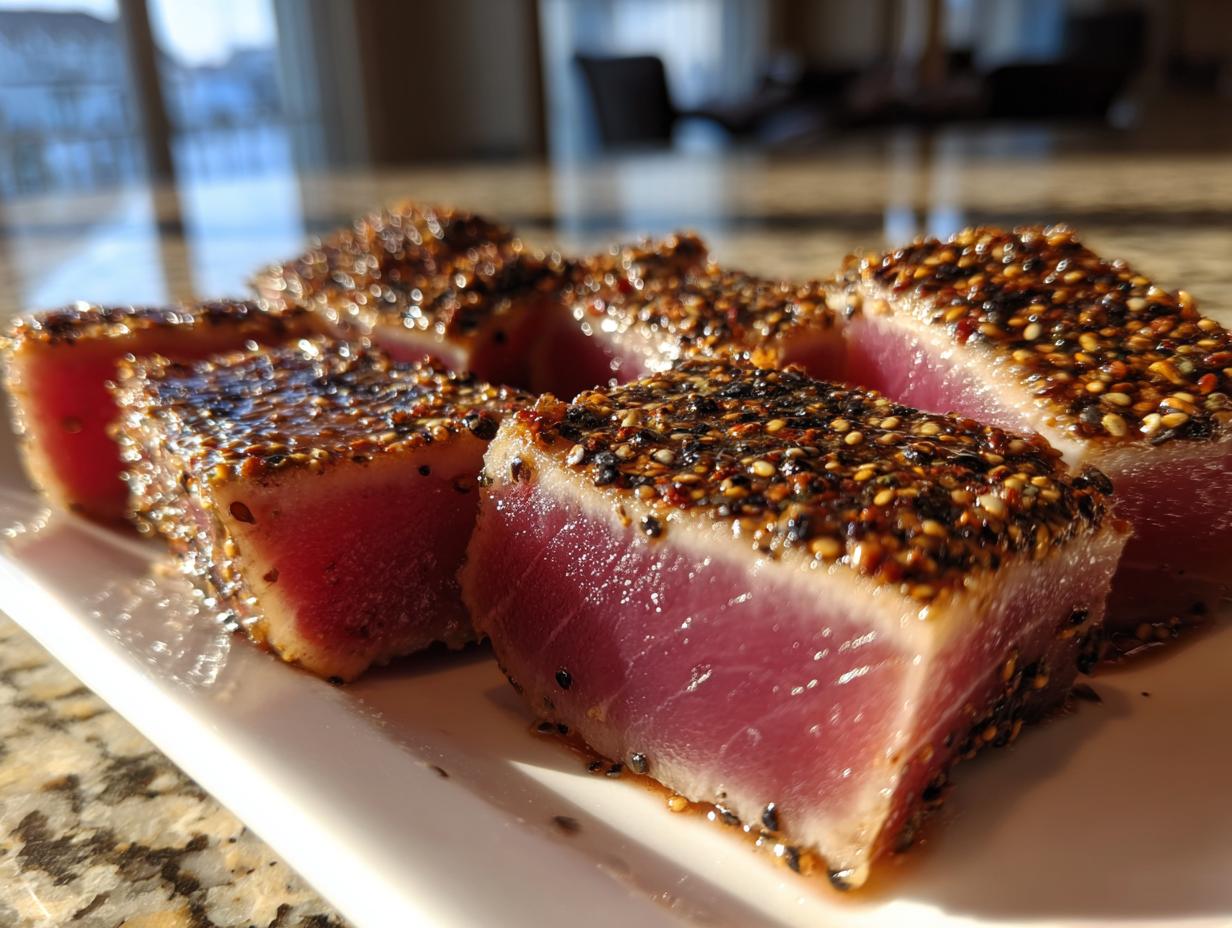
I used to think getting that perfect, deep, flavorful crust on Ahi tuna—that beautiful contrast between the dark sear and the cool, rare center—was something reserved only for fancy sushi restaurants. Honestly, I burned so many pieces trying to figure out the timing! It felt impossible to keep that high-quality, sushi grade tuna from turning gray halfway through. But I cracked the code, and I’m thrilled to share it with you. This recipe for Seared Ahi Tuna is incredibly fast; you are looking at maybe three minutes of cooking time total for a stunning, gourmet tuna steak perfect for a healthy dinner. It proves that amazing food doesn’t need hours of fuss.
It takes confidence to handle beautiful fish like this, and after navigating my own busy life trying to eat well, I wanted a method that was foolproof. Since my journey started with reclaiming quick, quality meals, knowing exactly how to handle high-heat searing is one of my favorite kitchen secrets to pass along. You can see more about why simplicity in the kitchen matters so much to me on our About Page.
- Why This Seared Ahi Tuna Recipe Works So Well
- Ingredients for Your Seared Ahi Tuna
- Step-by-Step Instructions for Seared Ahi Tuna
- Expert Tips for Perfect Seared Ahi Tuna Every Time
- Serving Suggestions for Your Asian Tuna Recipe
- Storing and Reheating Leftover Seared Ahi Tuna
- Frequently Asked Questions About Sushi Grade Tuna
- Estimated Nutritional Information for This Healthy Dinner
- Share Your Experience Making This Recipe
Why This Seared Ahi Tuna Recipe Works So Well
This isn’t just another recipe; it’s genuinely satisfying because it ticks off all the boxes for how I like to cook now—simple, fast, and elegant. It delivers that restaurant-quality experience without the fuss.
- Truly quick seafood recipe, ready in about 18 minutes total.
- It fits perfectly as a healthy dinner option when you don’t want to compromise on flavor.
- It feels gourmet but uses basic, powerhouse Asian-inspired flavors.
Quick Seafood Recipe for a Busy Schedule
When I was scrambling to keep up with work, I didn’t have time for complicated marinades or hours of simmering. That’s why I love this approach. We’re talking less than 20 minutes from fridge to plate! This means you actually have time to sit down and enjoy a wonderful, healthy dinner on a Tuesday night. It’s completely sustainable if you’re trying to eat better but are constantly strapped for time.
Achieving the Perfect Seared Ahi Tuna Crust
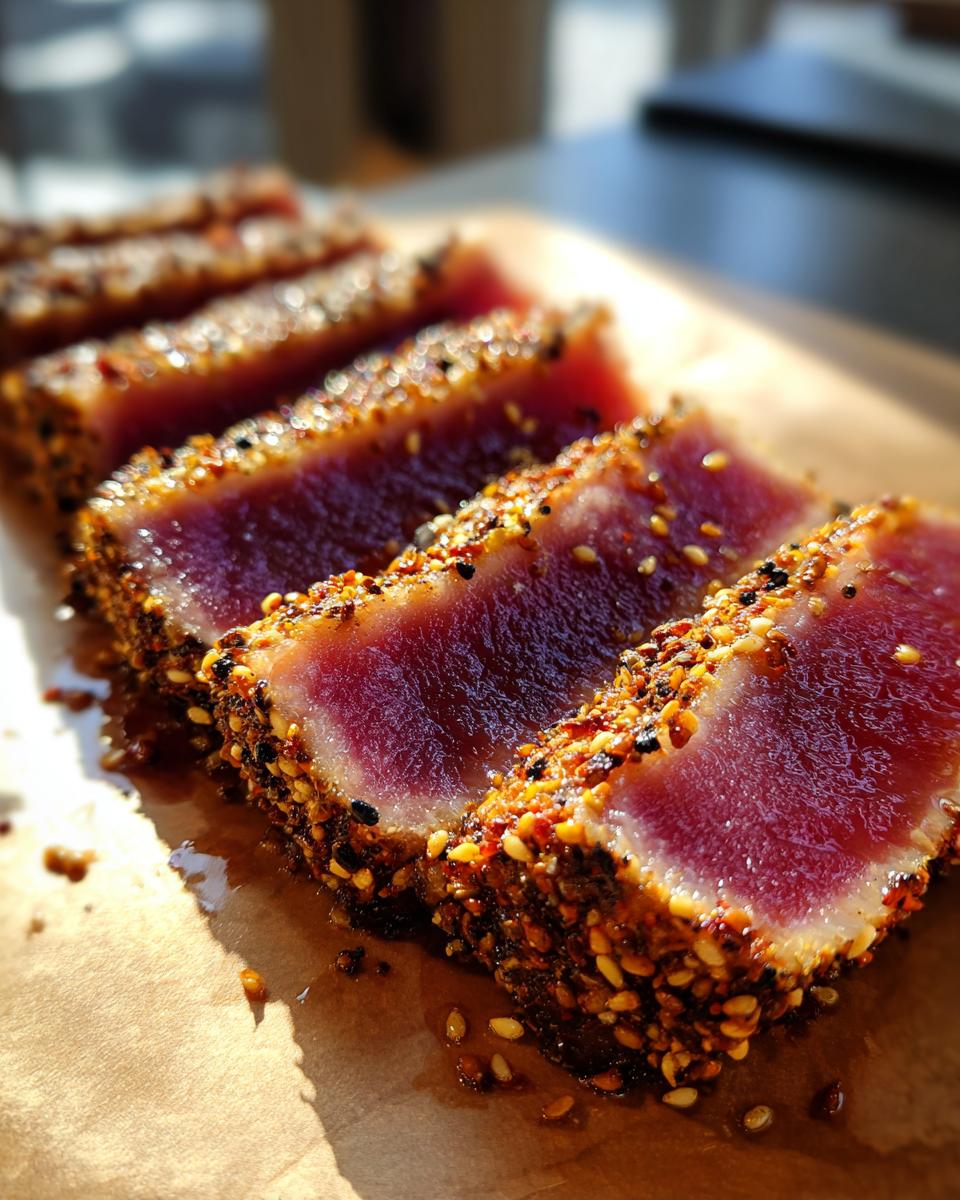
The secret to getting that incredible crust on your Seared Ahi Tuna is all about the surface temperature. It’s physics, really! You need the skillet screaming hot—and I mean *hot*—so that the moment the seasoned fish hits the pan, the sesame seeds start to toast instantly without the heat having time to soak into the center of the beautiful yellowfin tuna. This high-heat shock is what locks in the marinade flavor while leaving the inside perfectly rare.
Ingredients for Your Seared Ahi Tuna
For this quick seafood recipe, the quality of your fish is absolutely non-negotiable. If you buy anything less than excellent, sushi-grade tuna, you might as well stop right there! I always look for deep, ruby-red steaks that smell clean and fresh—that usually means higher quality yellowfin tuna. We’re using two beautiful 6-ounce steaks for this recipe, which is perfect for two adults looking for a light, gourmet tuna experience.
The marinade itself is super simple, relying on classic Asian flavors: sesame oil, soy sauce, some fresh ginger, garlic, and pepper. Oh, and you absolutely must have those sesame seeds for rolling; they create that wonderful crunch and look fantastic when seared!
Ingredient Preparation Notes and Substitutions
Listen, a few tweaks here make all the difference between good and great tuna. First, when it comes to the ginger and garlic, please use fresh. Dried flakes just won’t give you that bright, sharp flavor we need to complement the richness of the fish. Grate your ginger super fine!
Also, about the soy sauce—it’s crucial for that savory crust, but if you’re watching sodium, coconut aminos are a fantastic swap, trust me. They give you the salty, umami punch without the sodium kick. Don’t skip pressing the sesame seeds onto the fish firmly; you need a thick, even coat so the heat has something beautiful to toast!
Step-by-Step Instructions for Seared Ahi Tuna
Okay, this is where the magic happens, and honestly, it moves fast! Get everything ready before you turn on that stove because once the pan heats up, you have about three minutes to complete the cooking process. Patience upfront with the prep means we can rush through the actual cooking part. If you’re using a cast iron skillet like I highly recommend—it holds heat like a dream—you want to preheat that thing on high for a good five minutes until it’s smoking hot. Seriously, get it hot!
Preparing the Yellowfin Tuna for Searing
Step one sounds so simple, but if you skip it, your beautiful yellowfin tuna will steam instead of sear. You have to pat those steaks completely bone-dry using paper towels. I mean, blot them until you think they can’t give up any more liquid. Once they are dry, mix up that marinade—the oils, soy sauce, ginger, garlic, and pepper—and brush it all over every surface of the fish. Don’t be shy, but don’t drench it either!
Coating and Heating the Pan for Success
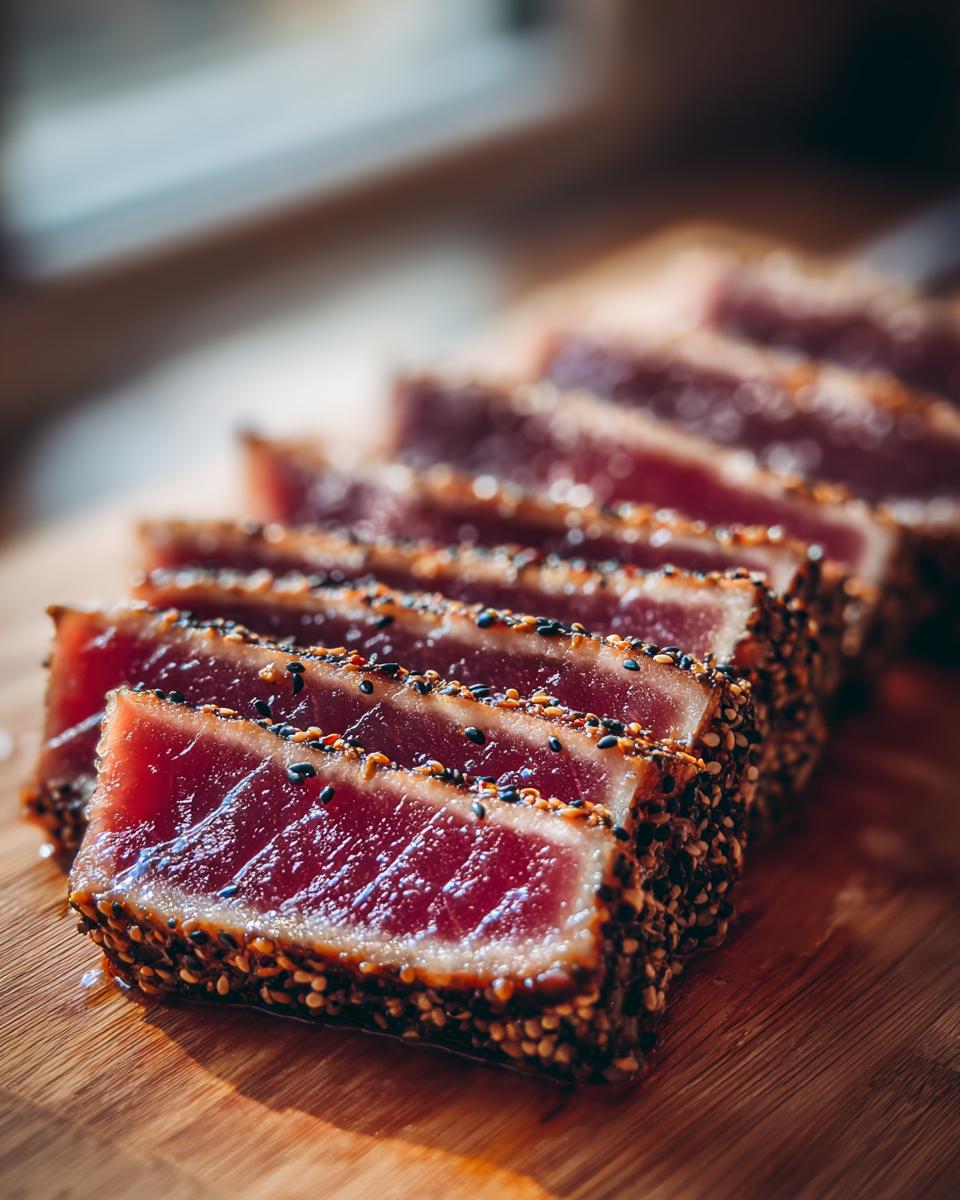
Next up is making that glorious seed crust! Pour your sesame seeds onto a flat plate, and gently roll each seasoned steak in them until they’re totally coated. I press lightly just to help them stick, but you don’t want to smash that delicate crust you just built. While you’re rolling, make sure that heavy skillet is still heating up on high. My little trick? Flick a drop of water in—if it evaporates immediately with a sizzle, you’re ready. If it just sits there, keep waiting!
The Searing Process and Resting the Gourmet Tuna
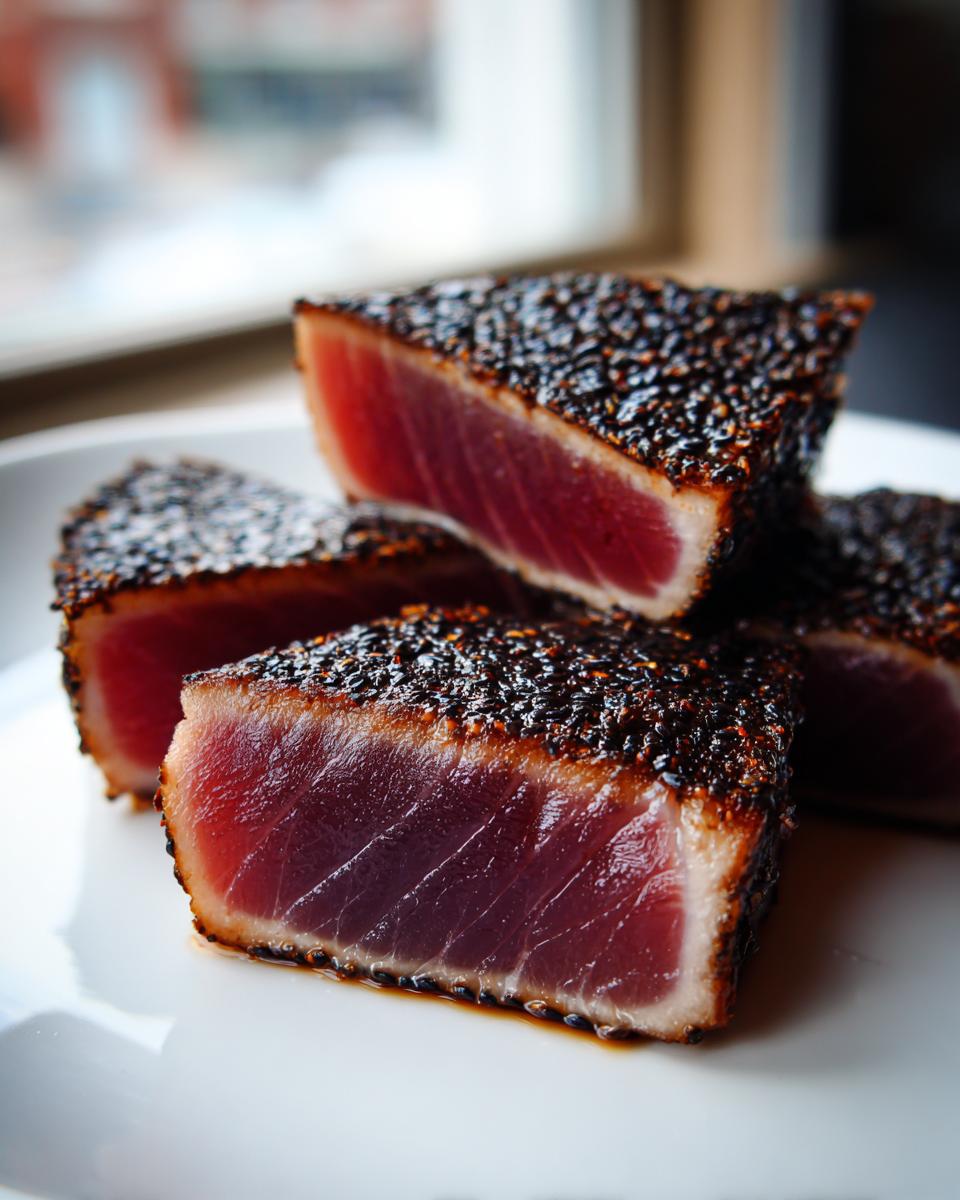
Now, carefully lay those crusted steaks into that screaming-hot skillet. You’ll hear a satisfying sound right away, which means you did the pan prep right! For that classic, cool-center, rare finish that makes this gourmet tuna so spectacular, sear them for just 60 to 90 seconds per side. If you are really nervous about raw food, you can nudge that up to two minutes per side for medium-rare, but stop there! Pull them out immediately. Just like any good piece of steak, they need a rest. Let them sit on a cutting board for about five minutes before you slice them against the grain. This keeps all those delicious juices right where they belong!
Expert Tips for Perfect Seared Ahi Tuna Every Time
Okay, so you’ve got the recipe down, but let me share a few things I learned the hard way so you can nail that perfect crust without stressing out. Achieving truly great Seared Ahi Tuna is more about setup than it is about the three minutes you spend cooking it, honestly!
First off, let’s talk about the fish temperature *before* it hits the pan. I know we want this to be a quick seafood recipe, but don’t pull the steaks straight from a freezing fridge right into the hot pan. I usually let my sushi grade tuna sit on the counter for about 10 minutes while I’m setting up the spices and heating the skillet. This slight tempering means the sear applies evenly across the whole steak instead of just scorching the outside while leaving the very edge cold and raw.
Never, ever overcrowd the pan. I know sometimes we feel like we need to cook two servings at once, but if those beauties are touching, the temperature of your pan drops instantly, and you’re back to steaming. If you’re cooking for more than two people, sear the steaks in batches. It’s worth the extra 90 seconds of effort.
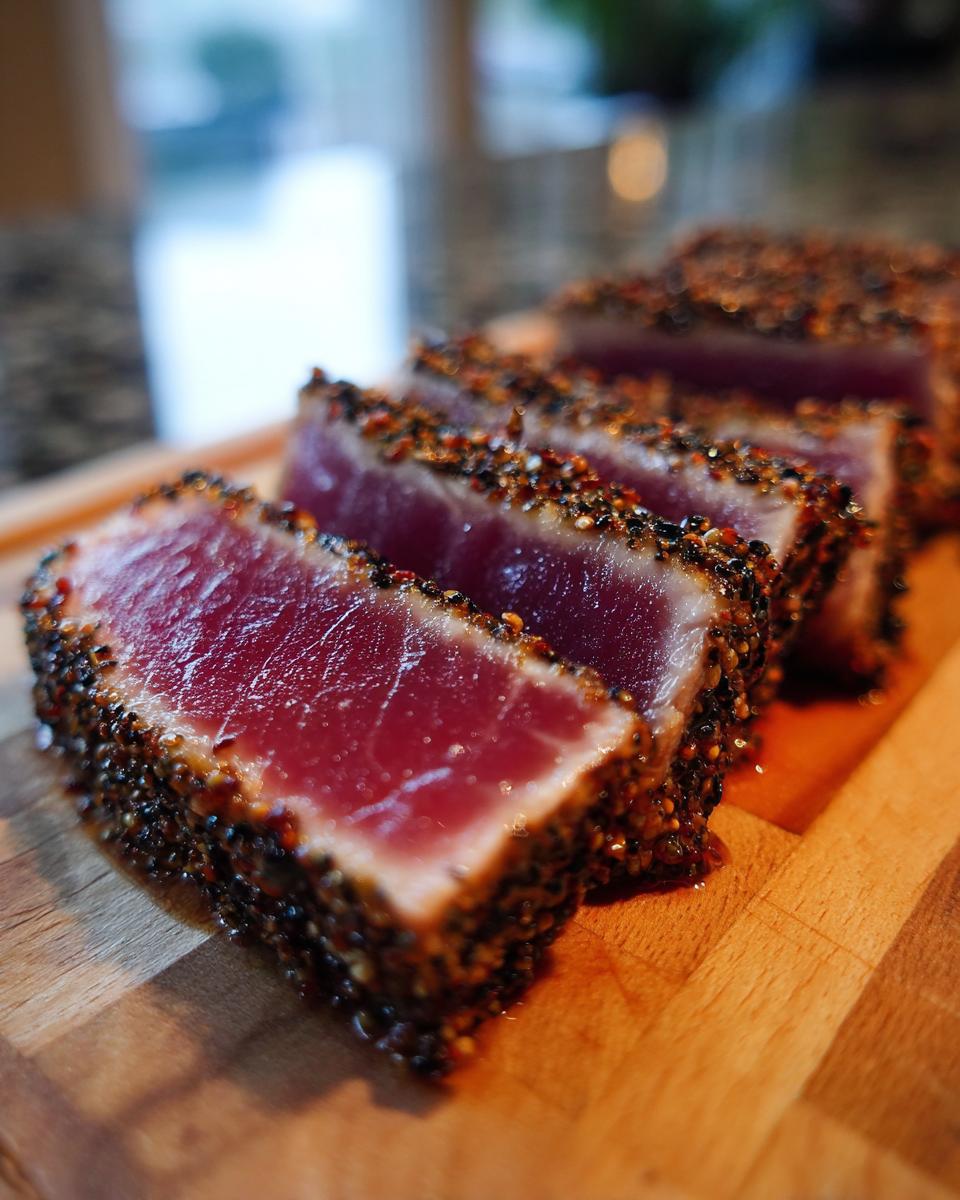
Another thing I see people struggle with is slicing. You have to remember that the structure of the muscle fibers in the yellowfin tuna runs one way. If you cut parallel to those lines, you end up with shreds that immediately fall apart on the plate. Always slice against the grain! This shortens those tough muscle fibers, giving you that buttery, melt-in-your-mouth experience we’re aiming for with this Asian tuna recipe.
And please, for the love of a good sear, don’t move the fish once it’s down! Resist the urge to peek or nudge it around. That crust you want takes direct, uninterrupted contact with that super-hot surface to develop that deep brown flavor layer. Let it sit there and do its job for the full 60 to 90 seconds; that’s how you guarantee a fantastic, crispy outside!
Serving Suggestions for Your Asian Tuna Recipe
Now that you have perfectly cooked, beautiful Seared Ahi Tuna steaks, the fun part is plating! We want to build a meal that feels light and truly nourishing, just like we talk about here at Pure Plate Path. Because this is such a clean, flavorful centerpiece, it pairs wonderfully with simple, fresh sides. Don’t feel like you have to overcomplicate the plate!
My absolute favorite way to serve this Asian tuna recipe is right over a big, crisp bed of mixed greens. I toss the greens with a tiny bit of rice vinegar and maybe a drizzle of sesame oil—that’s it! The cool, sharp freshness of the salad contrasts so nicely with the warm, caramelized crust of the fish.
If you need something a bit heartier, steamed rice—jasmine or brown sushi rice works well—is perfect for soaking up any residual juices from the marinade. I like to make sure my rice is fluffy and simple. If I use rice, I usually serve the tuna sliced over the top, kind of like a deconstructed poke bowl.
A fantastic, simple garnish that brings the whole dish together? Fresh cilantro and thinly sliced scallions sprinkled generously over the top of the sliced tuna. If you want one extra drizzle of flavor, you can whisk up a lightning-fast sauce: just mix a teaspoon of soy sauce with five drops of toasted sesame oil, and zig-zag it over the plate after you slice it. It elevates this dish from quick dinner to five-star presentation instantly!
Storing and Reheating Leftover Seared Ahi Tuna
This is the tricky part of making a quick seafood recipe for two people—you often end up with leftovers, or maybe you just want to meal prep! First thing first, when it comes to leftover Seared Ahi Tuna, my advice is almost always to eat it cold the next day. It’s just better that way! The magic of that perfect sear is based on textural contrast, and reheating throws that balance completely out of whack.
If you have leftovers, make sure you store them properly. Those beautiful steaks should go straight into an airtight container—don’t leave them sitting on the counter! They need to be refrigerated within two hours of being cooked. Because they are so lean, they should keep okay in the fridge for about one full day, maybe two if you’re lucky, but honestly, the texture starts to decline fast after 24 hours.
Now, about reheating: Don’t bother trying to warm them up in the microwave or the oven, please! You’ll just end up finishing the cooking process you worked so hard to stop with that quick sear, and you’ll end up with dry, gray fish. It’s a total waste of good sushi grade tuna.
If you absolutely cannot stand eating it cold, which I get, here’s the slightly less painful way to handle it. Slice the cold tuna very thinly—thinner than you did before—and toss it into a vibrant salad right before serving. Let the dressing or the freshness of the vegetables warm it up just slightly at room temperature. It won’t be that perfect hot-crust/cold-center experience, but it will be far better than trying to reheat the whole steak!
Frequently Asked Questions About Sushi Grade Tuna
Even though this Asian tuna recipe is straightforward, I know questions pop up, especially when dealing with raw fish. Buying and searing high-quality seafood requires a little bit of knowledge, but once you know the basics, you’ll feel totally confident making this healthy dinner!
What is the difference between Ahi and Yellowfin tuna?
This is a great question, and it confuses a lot of people! Essentially, Ahi is a Hawaiian term, and it’s generally used in the US to refer to either bigeye tuna or yellowfin tuna. When you see “Ahi” on a menu or at the seafood counter, they almost always mean one of those two excellent varieties that hold up well to searing. The key is looking for that vibrant, deep red color. If it’s brown or dull, it’s not the quality you need for a proper sear, no matter what they call it!
Can I use frozen tuna for this recipe?
You absolutely can, but you have to handle the thawing process with extreme care because we need that fish surface dry! If you buy frozen sushi grade tuna, you must thaw it slowly in the refrigerator overnight. Never thaw it on the counter at room temperature, as that invites safety issues and ruins the texture we need. Once it’s fully thawed in the fridge, take it out about 30 minutes before you start the prep, and then pat it aggressively dry with paper towels before you even think about brushing on the marinade. If it feels damp, your crust won’t form!
How do I know if my Seared Ahi Tuna is done?
This is where technique meets intuition! Remember, we are going for a crusty exterior and a cool, almost raw center. If you are cooking for two minutes per side (medium-rare), you should look for the outside edges to have changed color slightly—maybe a light pink ring—but the center should still look deep red or purple when you peek at the thickest part. If you press the side of the steak with your finger, it should offer slight resistance but still feel “squishy” inside—that’s perfect for Seared Ahi Tuna. The second it starts feeling firm when you press it, you’ve overcooked it and lost that wonderful texture associated with a gourmet tuna preparation.
Estimated Nutritional Information for This Healthy Dinner
When I talk about how this is a wonderful healthy dinner, I mean it! Because this Seared Ahi Tuna recipe is so simple and relies on fresh fish and minimal added fats, the numbers really shine. Remember, these figures are estimates based on the ingredients listed for one serving, so treat them as a guide rather than gospel truth. It’s great to see how clean this gourmet tuna really is!
- Calories: Approximately 280
- Protein: A whopping 30 grams!
- Total Fat: Around 15 grams (mostly healthy unsaturated fats)
- Carbohydrates: Very low at only 5 grams
- Sodium: About 350 mg (this will vary based on your soy sauce choice!)
That high protein and low carb count is exactly why this quick seafood recipe leaves you feeling satisfied but not sluggish. It truly supports a balanced way of eating.
Share Your Experience Making This Recipe
I truly hope this recipe sets you on your path to mastering Seared Ahi Tuna! It feels like such a victory when you pull those perfect, crusty steaks off the heat for the first time. I always want to know if it worked out for you—did you get that beautiful deep sear? Was the center cool and rare, just like you wanted?
Please, don’t be shy! Leave your star rating right below this section and tell me in the comments how your Asian tuna recipe turned out. Did you serve it with rice, or maybe on a bed of greens? Knowing what works for you helps the whole community here at Pure Plate Path build confidence in these simple, powerful techniques. If you had any hiccups along the way, or if you figured out a fantastic new twist on the marinade, share that too! I love swapping notes, and you can always reach out directly if you need one-on-one help using our Contact Page!
PrintPerfectly Seared Ahi Tuna Steaks
Learn how to quickly sear sushi-grade ahi tuna to achieve a flavorful crust and a rare, cool center. This is a quick seafood recipe for a healthy dinner.
- Prep Time: 10 min
- Cook Time: 3 min
- Total Time: 18 min
- Yield: 2 servings 1x
- Category: Dinner
- Method: Pan-Searing
- Cuisine: Asian
- Diet: Low Fat
Ingredients
- 2 (6 oz) sushi grade tuna steaks
- 2 tablespoons sesame oil
- 1 tablespoon soy sauce or tamari
- 1 teaspoon grated fresh ginger
- 1 clove garlic, minced
- 1/2 teaspoon black pepper
- 1/4 cup sesame seeds (mixed black and white)
Instructions
- Pat the tuna steaks completely dry using paper towels. This step is key for a good sear.
- In a small bowl, whisk together the sesame oil, soy sauce, ginger, garlic, and pepper. Brush this mixture evenly over all sides of the tuna steaks.
- Place the sesame seeds on a shallow plate. Roll each seasoned tuna steak in the seeds until all sides are coated evenly. Press lightly to make sure the seeds adhere.
- Heat a heavy-bottomed skillet (cast iron works well) over high heat until it is very hot. Add a small amount of high-heat oil if your pan is not non-stick, but avoid overcrowding.
- Carefully place the coated tuna steaks in the hot skillet. Sear for 60 to 90 seconds per side for rare, or up to 2 minutes per side for medium-rare. You want a dark crust but a cool center.
- Remove the tuna from the pan immediately. Let the steaks rest on a cutting board for 5 minutes before slicing.
- Slice the tuna against the grain into 1/4-inch thick pieces. Serve immediately.
Notes
- For best results, use high-quality yellowfin tuna.
- If you prefer a different flavor, you can substitute the soy sauce with coconut aminos for a lower sodium option.
- Serve this gourmet tuna over a bed of mixed greens or with steamed rice for a complete meal.
Nutrition
- Serving Size: 1 steak
- Calories: 280
- Sugar: 1
- Sodium: 350
- Fat: 15
- Saturated Fat: 2
- Unsaturated Fat: 13
- Trans Fat: 0
- Carbohydrates: 5
- Fiber: 1
- Protein: 30
- Cholesterol: 75