

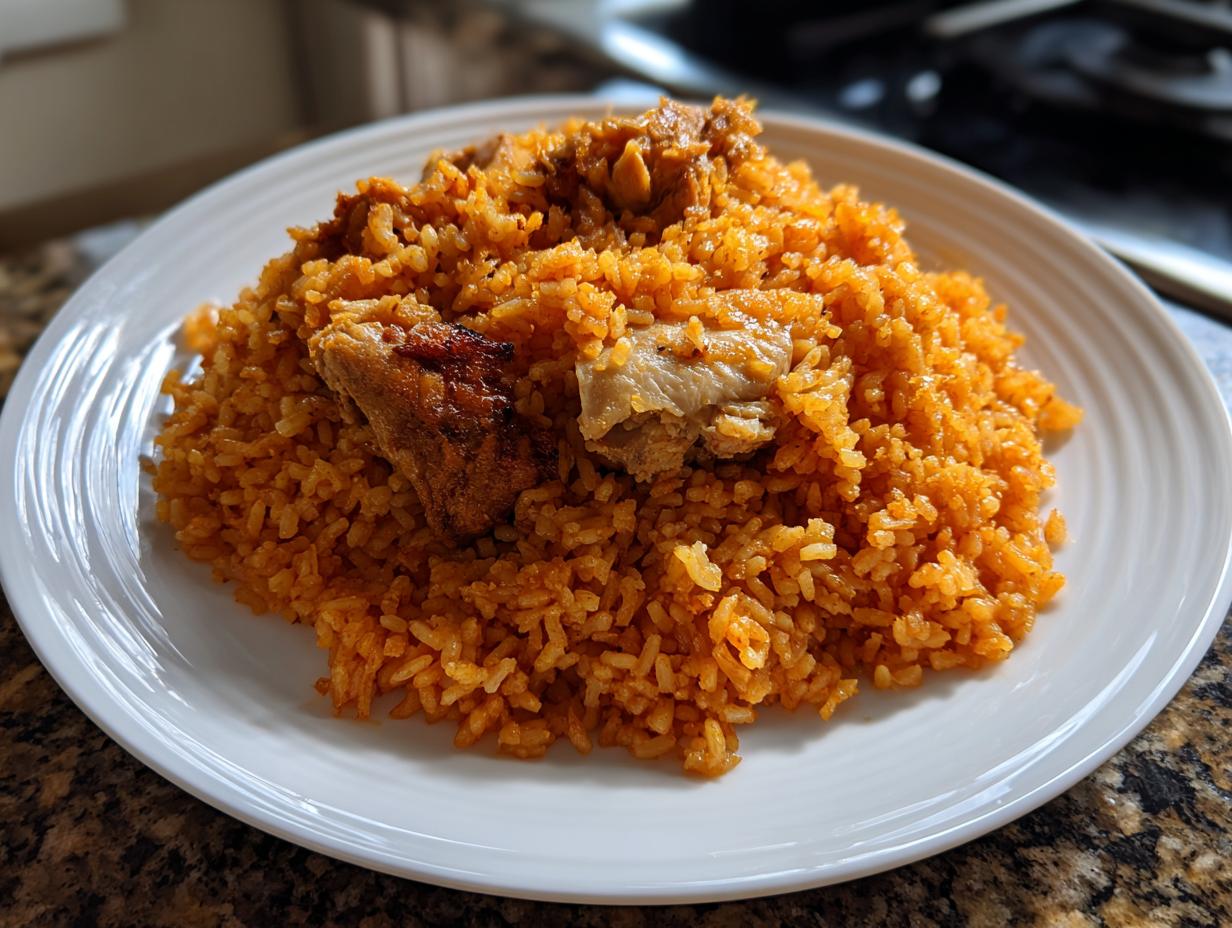
There’s just something about West African food that pulls you right in, isn’t there? The colors, the spices, that deep, savory warmth—it’s the ultimate comfort food. For years, I searched for a recipe that delivered that authentic, soul-satisfying taste without taking up my entire evening. When life got hectic during my marketing days, I nearly forgot the joy of making something truly nourishing from scratch. But that’s where the path turned around, bringing me back to simple, powerful flavors. If you’re looking for simple, accessible comfort for those frantic days, check out my tips for quick, easy weeknight dinners! Trust me when I say, mastering the Nigerian jollof rice, especially this smoky ‘Party Classic’ version, is achievable for any busy home cook!
- Why This Nigerian Jollof Rice Recipe is Your New Favorite Party Jollof Recipe
- Essential Ingredients for Authentic Jollof Rice
- How to Make Jollof Rice: Step-by-Step Instructions
- Tips for Success with Your Party Jollof Recipe
- Serving Suggestions for Your Flavorful African Food
- Storage & Reheating Instructions for Leftover Jollof Rice
- Frequently Asked Questions About Making Jollof Rice
- Nutritional Information for This Spicy Tomato Rice
- Share Your Authentic West African Rice Experience
Why This Nigerian Jollof Rice Recipe is Your New Favorite Party Jollof Recipe
Look, I’ve tried a few versions of jollof rice over the years, and honestly, some of them end up just a little… mushy. Not this one! This Nigerian Jollof Rice stands head and shoulders above simply spiced tomato rice because we focus on two huge things: unbelievable smoky depth and grains that stay perfectly separate and fluffy. It’s what you dream of when you think of true West African Rice at a celebration.
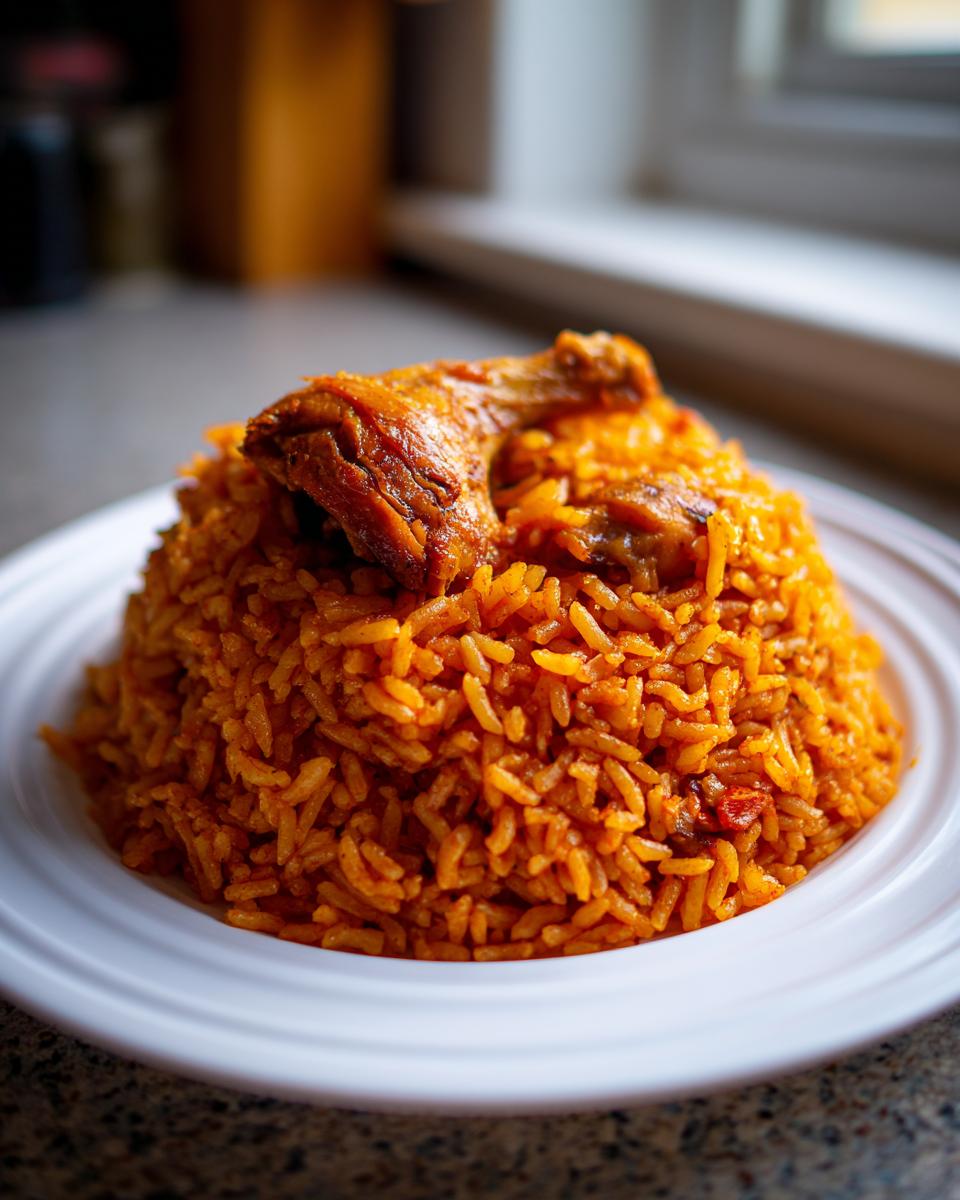
- The color is vibrant—deep red from cooking down the stew just right.
- The grains stay distinct; no sticky rice here, I promise!
- It delivers that authentic, crave-worthy smoky finish.
If you’re looking for deep, soulful flavors without a huge fuss, you can pair this amazing rice with my recipe for creamy chicken and dumplings, or just enjoy the Jollof solo!
Achieving the Signature Smoky Jollof Rice Flavor
This is the secret handshake of any great *Party Jollof Recipe*: the smoke! You get that irresistible ‘slight burn’ flavor by turning the heat up just a hair for about five minutes right at the very end of the cooking time. You’re not trying to burn your pot, heavens no! You just want that whisper of char on the bottom layer of rice to infuse the steam with that signature smokiness. It’s pure magic, and it’s what makes this dish so famous.
Beginner Friendly Jollof Rice Technique
When I first started cooking this, I thought it was going to be complicated, but I was happily wrong! While we are achieving gourmet, party-style flavor, the technique itself is super straightforward. Because we rinse the rice so well and use the foil-and-lid method, you minimize steam escape and avoid that dreaded soggy bottom. You just set the low heat, walk away, and trust the process. It’s honestly one of the most rewarding dishes you can conquer!
Essential Ingredients for Authentic Jollof Rice
Okay, let’s talk about what actually goes into this flavor explosion. Getting the base right is everything for authentic jollof rice. You need those gorgeous, ripe red tomatoes—not the pale ones—and your bell peppers should be bright. We’re building a stew here, not just a sauce! Remember, the depth of flavor starts here. If you’re looking for other powerful flavors to mix into your routine, you’ve got to try my chicken bacon ranch pasta next week; it hits that savory note just right!
Protein Choice: Preparing the Chicken for Your Jollof Rice
We are browning chicken first, and this is critical! Don’t just toss the chicken in later. You’ll take your chicken pieces, season them up—salt, pepper, and some of that minced garlic—and you’re going to sear them in the oil in your pot first. You are not cooking them through, just getting a nice color on them. When you take that chicken out, you leave all those gorgeous browned bits and flavor oils behind. That oil is the foundation for our entire tomato stew. Trust me on this one!
Rice Selection for Fluffy Jollof Grains
For that truly separate, non-soggy grain—the marker of a great jollof rice—you absolutely need long-grain parboiled rice. It holds its structure so much better than regular white rice when it simmers in that rich tomato stew. The single biggest mistake beginners make? Not rinsing it! You must rinse that rice until the water runs clear. Seriously, put it in a bowl and swish it around until the water looks clean. That wash removes the excess starch that turns your beautiful jollof into one big sticky clump. Be patient; cleaning that rice is your insurance policy against mush!
How to Make Jollof Rice: Step-by-Step Instructions
Alright, this is where we bring all those lovely ingredients together into one glorious pot. The magic of this jollof rice comes from layering the flavors, starting with that bright pepper base and moving into the long, slow steam. It moves pretty quickly once you have your chicken browned and your peppers blended. If you’re making this for a special dinner and need some extra savory flair, make sure you check out my recipe for the best creamy chicken fried steak—it’s an entirely different vibe, but equally comforting!
Building the Flavorful Spicy Tomato Rice Base
After you’ve browned your chicken and set it aside, you sautée those diced onions until they’re soft. Then comes the real trick for deep flavor: the tomato paste! You stir that paste into the oil and onions and let it cook for a good few minutes until it goes from bright red to a deeper, almost rusty red. That light darkening is caramelization, folks! Next, pour in the blended pepper mix—tomatoes, peppers, scotch bonnets, all that good stuff. Add your seasonings, bring it all to a simmer, and let it cook down for about 20 minutes. We need that stew thick and rich before the rice even gets involved. This intense flavor development is what separates great jollof rice from just average rice!
The Critical Steaming Phase for Perfect Jollof Rice
Once your rinsed rice is stirred into that beautiful, thick stew base and you’ve added just enough stock to cover it (check your liquid level!), pop that browned chicken back in. Now, listen closely because this is essential for fluffy grains: you must cover the pot tightly. I mean tightly. Use a layer of aluminum foil first, and then put the lid on top. Turn the heat down as low as it will go. Then, you walk away for 30 to 40 minutes. Do not lift the lid! Do not stir! If you stir during this steaming phase, you release the steam and break up the grains. Let it steam in peace until almost all the liquid is gone. It takes serious willpower, but this step guarantees you won’t end up with a soupy mess.
Tips for Success with Your Party Jollof Recipe
Everyone wants that next-level, restaurant-quality Party Jollof Recipe, and making it successful means paying attention to a few small details right at the end. Think of these tips as the finishing polish that takes your rice from great to absolutely unforgettable. I pull these insights straight from my notes—the tried-and-true advice that keeps me from having to wash pots full of sad, soggy rice at the end of the night!
Stock Choice and Liquid Ratio for Jollof Rice
The liquid measurement is probably the trickiest part, right? You want the liquid to just barely cover the rice once you’ve stirred it into that rich tomato stew base. If it looks like soup, you’re going to get mush. Now, you can absolutely use water if you’re out of stock, but I highly recommend using good quality chicken or vegetable stock. Why? Because that stock is full of flavor! It penetrates every single grain of rice during the steam, giving you a richer base flavor. If you’re looking for an even faster comfort meal later in the week, check out my recipe for easy 30-minute chicken and dumplings once you’re done with this rice!
How to Introduce the Smoky Element to Your Jollof Rice
We talked about this briefly, but I need to stress it again because this is the real secret weapon for that authentic smoky taste. Once your rice has steamed completely and absorbed almost all the liquid—when you are maybe five minutes away from turning the heat off—you crank it up just a bit. Just a touch. You are aiming for a very gentle scorching on the very bottom layer of the rice. That little bit of controlled heat creates the smoke that rises up and flavors the rest of the dish. It’s risky, I know, but it’s worth it for that incredible party flavor! Just remember to keep that foil and lid locked down tight so the steam does the work, not the direct, harsh heat.
Serving Suggestions for Your Flavorful African Food
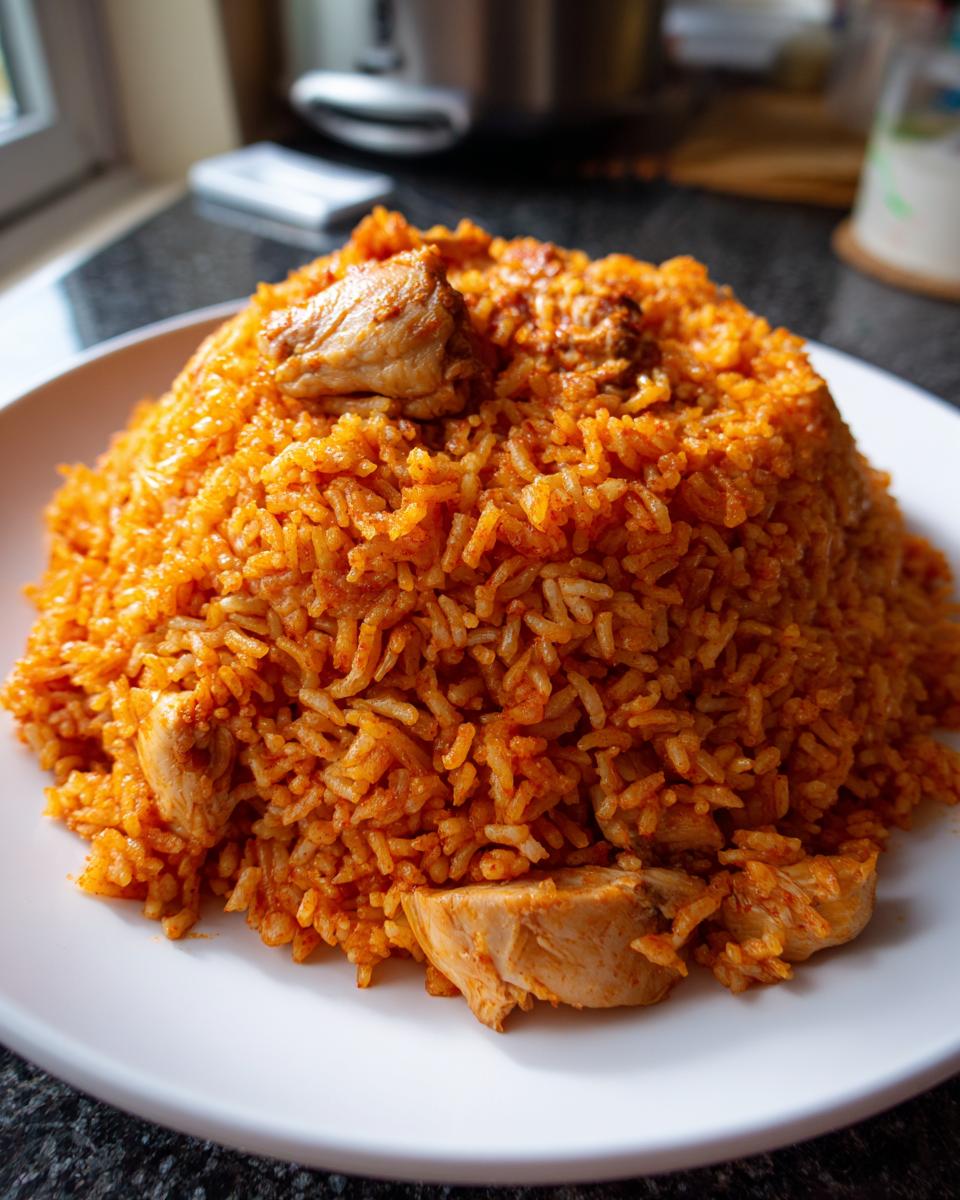
Now that you’ve mastered that amazing, vibrant jollof rice, it’s time to think about the perfect supporting cast! This dish is hearty enough to be its own star, but it truly shines when paired with something special. Traditionally, you can’t go wrong with some perfectly fried plantains—the sweetness against the spice is incredible. A side of creamy coleslaw is also fantastic to cut through the richness. Or, if you want another main dish to go alongside it, try my recipe for an amazing Jamaican brown stew chicken! Either way, enjoy that fantastic, flavorful African food you just made!
Storage & Reheating Instructions for Leftover Jollof Rice
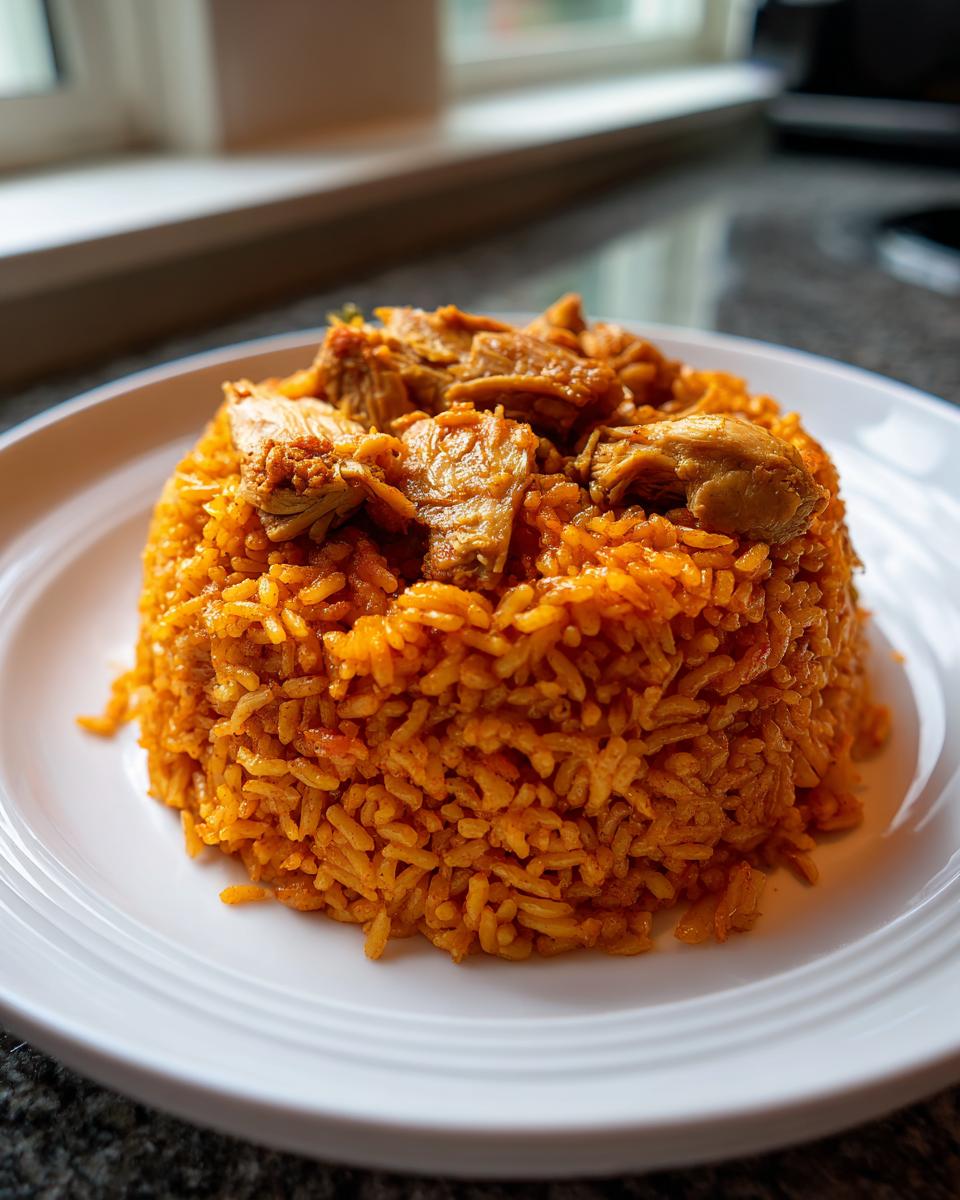
We all know the best things in life taste even better the next day, and leftover jollof rice is definitely one of them! Since this recipe focuses so hard on getting those grains fluffy, we have to be careful when reheating so we don’t turn it into a savory, spicy brick. Store any leftovers in an airtight container—I prefer using glass ones—in the fridge. It keeps perfectly well for about three to four days. If you know you aren’t going to finish it by then, it actually freezes beautifully too! Just make sure it’s cooled down completely before you seal it up tight.
When it comes time to reheat, you absolutely cannot just nuke it dry in the microwave. That’s the quickest way to disappointment! The key is moisture. If you’re reheating a small portion, just spoon the rice into a microwave-safe dish and add maybe a tablespoon of water or stock per cup of rice. Cover that dish tightly with a plate or plastic wrap, and microwave it in short bursts, stirring in between. That steam keeps everything soft!
For a bigger batch, I love reheating mine right on the stovetop in a pot over very low heat. Again, add a tiny splash of liquid—stock is always better for flavor continuity—and cover it really well. Let it heat up slowly. This gently plumps the grains back up. If you need a fast side dish later on, check out my super simple classic Panzanella salad for a fresh contrast after all that rich Jollof!
Frequently Asked Questions About Making Jollof Rice
I get so many questions about this amazing dish—it’s clearly a favorite for so many of you, and I love that you’re tackling this Flavorful African Food! Don’t worry about small mistakes; that’s how we all learn the little tricks to make the best jollof rice. Here are the things I get asked most often:
Can I make this Jollof Rice Recipe vegetarian?
Absolutely, you totally can! The secret to rich flavor in this recipe is that beautiful, thick tomato and pepper base. We built flavor by browning chicken, but you can skip that step entirely. Use a really high-quality vegetable stock instead of chicken stock to keep that savory depth. Or, if you want an even deeper umami flavor, try simmering dried mushrooms in your stock base! That way, you get all the texture and color without needing the meat. If you’re looking for another great vegetable-forward side after mastering this, you might want to check out my recipe for a super simple lemon parmesan kale salad.
What is the difference between Nigerian Jollof Rice and Ghana Jollof Rice?
This is the famous question, isn’t it? While both versions are delicious, the main difference usually comes down to the type of rice used and sometimes the spice profile. Nigerian recipes typically lean heavily on parboiled long-grain rice for that separate, fluffy texture and focus intensely on that smoky bottom layer. Ghanaian versions often use the Jasmine or Basmati varieties more frequently. Honestly, both are amazing, but this recipe nails the smoky Nigerian style you’re looking for at every party!
My Jollof Rice is soggy. What went wrong?
Oh, I’ve been there! If your jollof rice is soggy, 99% of the time it comes down to two things. First, did you rinse your rice until the water was clear? That starchy water turns into glue! Second, did you add too much liquid? Remember, the liquid should only just barely cover the rice when you put the lid on. If you feel like you have to stir it during the steaming phase, you added too much in the beginning. Keep that lid sealed, and the steam will cook it perfectly!
Nutritional Information for This Spicy Tomato Rice
When we talk about that hearty, flavorful jollof rice, we know we are making something satisfying. But I always believe in being honest about what we’re eating, because nourishing our bodies is part of that self-care journey I talk about on Pure Plate Path. Please keep in mind that these numbers are just estimates based on the recipe serving size of six, and the exact amounts can change depending on the kind of chicken or oil you use.
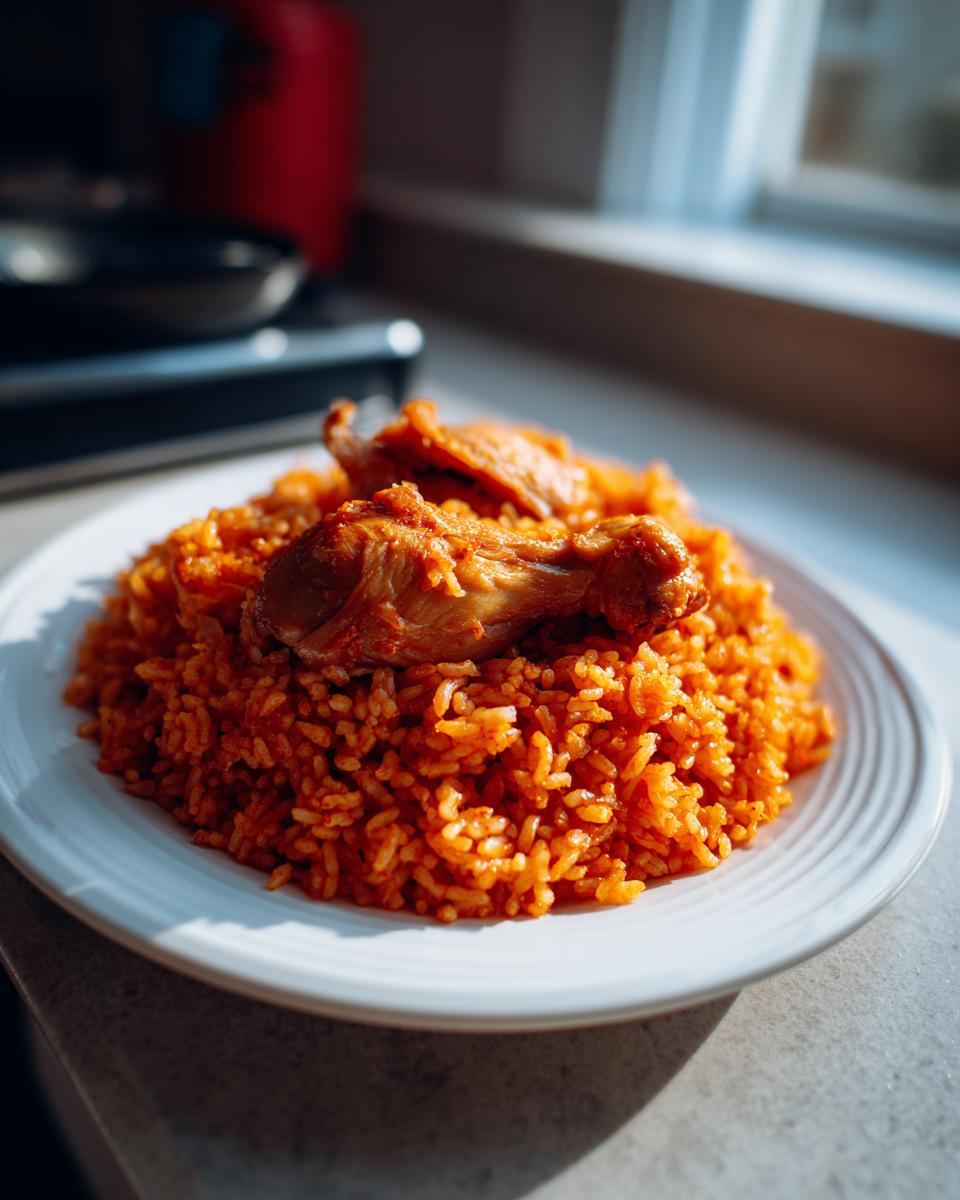
For a single serving of this incredibly Spicy Tomato Rice, here’s what you can generally expect. This section should help you plan your full meal, maybe pairing it with a fresh salad instead of something heavier! If you’re looking for another super supportive, nourishing meal idea, check out my recipe for easy black bean soup for a lighter night!
- Serving Size: 1 serving
- Calories: 450
- Fat: 18g
- Saturated Fat: 4g
- Carbohydrates: 55g
- Protein: 20g
- Sugar: 8g
- Sodium: 550mg
See? It’s completely balanced for a great main dish! Lots of protein from the chicken and good energy from the rice. It proves you don’t need complicated recipes to eat well; you just need great flavors built the right way.
Share Your Authentic West African Rice Experience
Now that you’ve gone through all the steps to make this incredible Nigerian jollof rice, I’m crossing my fingers that your kitchen smells amazing! This isn’t just food; it’s culture, it’s celebration, and it’s connection, and I truly want to know how it turned out for you in your own kitchen.
If you followed along and achieved that perfect smoky flavor and those fluffy gains, please do me a huge favor: come back here and leave a star rating! Your feedback helps so many other busy home cooks like us decide whether to tackle a new recipe, and I read every single comment.
Did you serve it with fried plantains? Did you manage to keep your lid sealed during that crucial steaming time? Tell me everything in the comments below! And if you snap a picture of your vibrant, beautiful pot of jollof rice, tag me on social media. I absolutely love seeing your creations and celebrating your wins in the kitchen. It reminds me why I started Pure Plate Path in the first place—to connect with people just like you!
If you loved reclaiming this beautiful cooking tradition and want to read more about our journey toward simple, nourishing food, take a peek at my About Page!
PrintAuthentic Nigerian Jollof Rice: The Smoky Party Classic

Make authentic Nigerian Jollof Rice, a vibrant, one-pot West African staple. This recipe focuses on building the rich tomato base and achieving the signature smoky flavor perfect for any gathering.
- Prep Time: 25 min
- Cook Time: 60 min
- Total Time: 1 hour 25 min
- Yield: 6 servings 1x
- Category: Main Dish
- Method: Stovetop
- Cuisine: Nigerian (West African)
- Diet: Vegetarian
Ingredients
- 2 cups long-grain parboiled rice
- 1.2 kg chicken pieces (or preferred protein)
- 4 large ripe tomatoes
- 1/3 cup tomato paste
- 2 red bell peppers
- 1–2 scotch bonnet or habanero peppers (adjust heat)
- 2 large onions, divided
- 4 cloves garlic
- 1 tablespoon fresh ginger, grated
- 1/2 cup vegetable oil
- 4 cups chicken or vegetable stock
- 2 teaspoons dried thyme
- 2 bay leaves
- 1 teaspoon curry powder
- Salt to taste
- 1 teaspoon smoked paprika (optional, for extra smoke)
Instructions
- Prepare the chicken: Season the chicken pieces with salt, pepper, and half of the minced garlic. Brown the chicken in a large pot with vegetable oil until lightly colored. Remove the chicken and set it aside, leaving the oil in the pot.
- Make the pepper base: Blend the tomatoes, red bell peppers, scotch bonnets, one onion, remaining garlic, and ginger until smooth.
- Sauté aromatics: Dice the remaining onion and sauté it in the pot with the oil until soft. Stir in the tomato paste and cook for 3-5 minutes until it darkens slightly.
- Cook the stew: Pour the blended pepper mixture into the pot. Add thyme, curry powder, bay leaves, smoked paprika (if using), and salt. Bring to a simmer and cook uncovered for 15-20 minutes, allowing the sauce to reduce and deepen in flavor. This step is key for the final color.
- Combine and steam: Rinse the parboiled rice thoroughly until the water runs clear. Add the rinsed rice to the tomato stew base and stir well to coat every grain. Pour in the stock. The liquid should just cover the rice; add more stock if needed.
- Cook the rice: Return the browned chicken pieces to the pot, nestling them into the rice. Bring the mixture to a boil, then immediately reduce the heat to the lowest setting. Cover the pot tightly with foil and then the lid. Cook undisturbed for 30-40 minutes until the rice is tender and the liquid is absorbed. Do not stir during this time.
- Achieve the smoke: For the signature ‘party’ flavor, increase the heat slightly for the last 5-10 minutes of cooking to allow a slight burn (scorching) at the bottom of the pot.
- Rest and serve: Turn off the heat and let the rice steam, covered, for another 10 minutes. Fluff the rice gently with a fork before serving. Serve with the chicken.
Notes
- Rinsing the parboiled rice removes excess starch, helping the grains stay separate and fluffy.
- For the best smoky flavor, use a heavy-bottomed pot and allow the bottom layer of rice to slightly scorch without burning completely.
- You can substitute chicken stock with water if preferred, but stock adds depth to the flavor profile.
Nutrition
- Serving Size: 1 serving
- Calories: 450
- Sugar: 8
- Sodium: 550
- Fat: 18
- Saturated Fat: 4
- Unsaturated Fat: 14
- Trans Fat: 0
- Carbohydrates: 55
- Fiber: 5
- Protein: 20
- Cholesterol: 65